
.png)
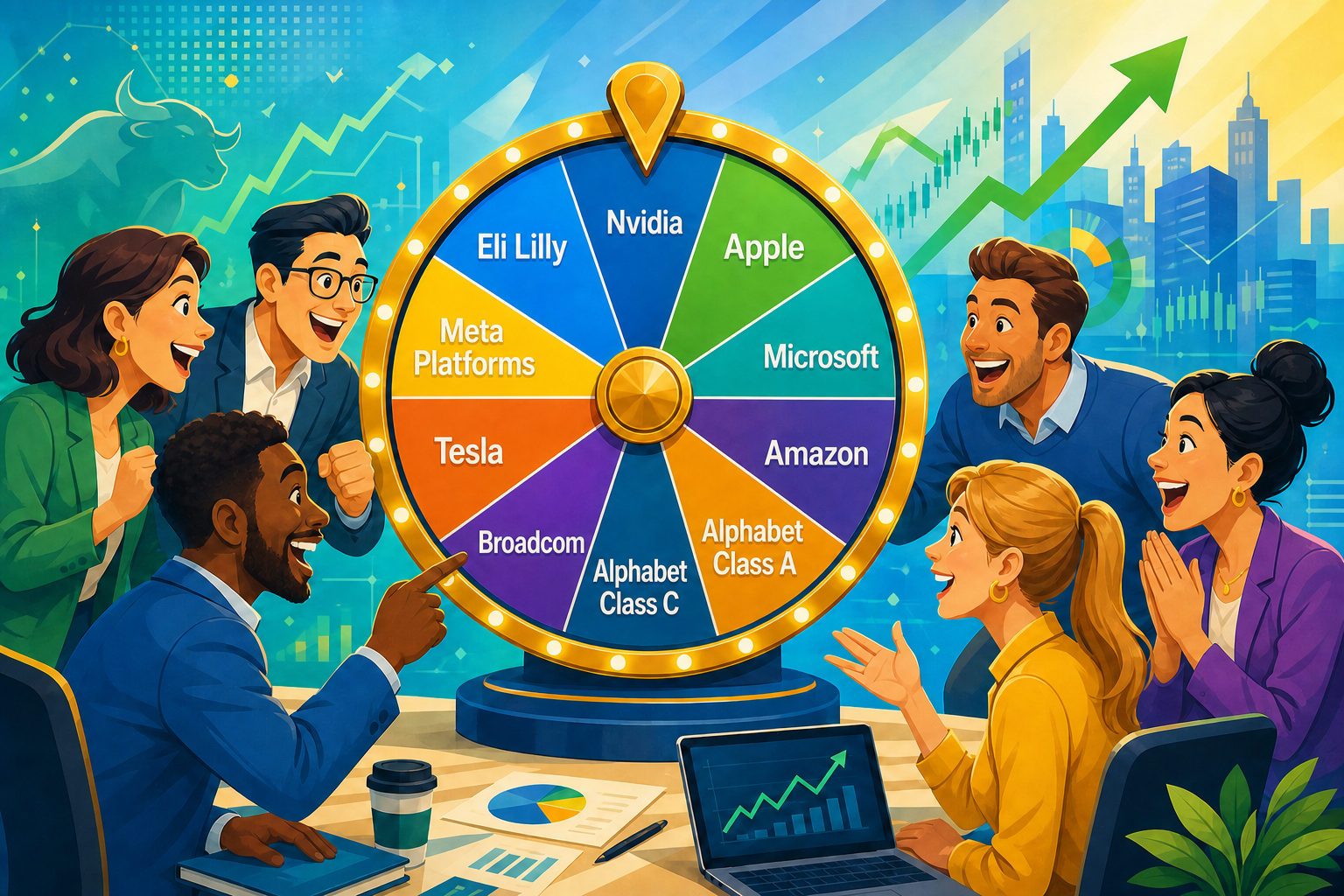
The return of single-stock futures reflects Wall Street's growing appetite for speculation. Know the difference between investing and wagering.
KEY TAKEAWAYS
-
Single-stock futures return after a previous eighteen-year experiment failed to attract meaningful trading volume. Lower margin requirements and a more leverage-friendly retail market have created a new opportunity for CME to try again.
-
The contracts provide leveraged exposure to individual stocks without transferring ownership of the underlying shares. Investors receive cash gains or losses based solely on price movements.
-
Single-stock futures differ significantly from options because losses are not capped and positions are marked to market daily. Overnight price moves can trigger margin calls and forced liquidations.
-
Although the product has legitimate institutional hedging applications, the introduction of micro-sized contracts suggests retail participation is a primary growth target. The marketing reflects today's speculative trading culture.
-
Investors should distinguish between owning a business and making a leveraged wager on its share price. Those are fundamentally different financial activities despite sharing the same ticker symbol.
MY HOT TAKES
-
Wall Street rarely abandons financial products forever; it simply waits for investor behavior to change before trying again. Today's return of single-stock futures reflects changing demand more than product innovation.
-
Increased availability of leverage should not be confused with improved investment opportunities. Easier access often magnifies both gains and mistakes.
-
Financial engineering continues to create more ways to speculate than to invest. The expanding menu of products makes investor education more important than ever.
-
Marketing often emphasizes efficiency and flexibility while minimizing operational risks such as margin calls, overnight exposure, and liquidity. Reading the fine print matters more than ever.
-
Long-term wealth creation still comes from owning productive businesses rather than continuously betting on short-term price movements. The distinction remains one of the most important lessons in investing.
-
You can quote me: "Single-stock futures aren't making investing easier—they're making leverage easier."
Anything goes. Wall Street has a habit of resurrecting things that already failed once, usually with better marketing the second time around. Today, CME Group is bringing back single-stock futures–a product so unloved the first time around that it quietly died in 2020 after eighteen years of nobody showing up. Now it's back, with lower margin requirements and a retail crowd that's spent the last few years getting very comfortable with leverage–perhaps a bit too comfortable. You may have noticed a growing number of ways for you to stake your money on what may be–in the future. Options, prediction markets, odd crypto tokens, complicated debt offerings. To be clear, all of these instruments are important with many specific uses, but investors need to understand the difference between owning any of these or the new, new futures, and owning a stock itself. Before you decide whether this belongs anywhere near your portfolio, let's talk about what it actually is.
Let’s start with a little history lesson–you don’t have to take notes. Single-stock futures have a longer, weirder backstory than you'd guess for something debuting on your brokerage app today. Back in 1982, the SEC and the CFTC got into one of those turf wars only Washington could produce, and the compromise–the Shad-Johnson Accord–basically outlawed futures on individual stocks entirely. Nobody could trade them, for EIGHTEEN YEARS, because two regulators couldn't agree on who got to referee a product that didn't even exist yet. It took until 2000 for Congress to lift the ban, and by 2002 two exchanges rushed in to launch the product–OneChicago, backed by the CME, CBOE and CBOT, and a scrappier competitor called NQLX. NQLX folded by 2004, unable to find enough traders willing to show up. OneChicago hung around gamely for another sixteen years, even carving out a clever securities-lending niche nobody outside the industry ever heard of, and finally shut its doors in September 2020 having never built the volume its backers dreamed of. Two exchanges, two decades, one product Wall Street collectively shrugged at. That's the sequel nobody asked for, and yet here we are, watching the reboot–TODAY!
So why bet on round two? Two things changed. First, after OneChicago closed, regulators quietly lowered the minimum margin requirement on these contracts from 20% of the position down to 15%–a little more leverage, a little more incentive for a trading desk to bother making markets in the product. Second, and more importantly, the retail appetite that OneChicago spent two decades waiting for actually showed up–it just showed up somewhere else. In case you haven’t noticed, options volume has exploded. Prediction markets went from a curiosity to a mainstream pastime. Crypto perpetual futures turned an entire generation of traders into people who think nothing of putting leveraged, single-name bets on with their thumb before finishing their coffee. CME isn't creating new demand for leveraged stock bets. It's just building a new pipe for demand that already exists.
Here's what actually launches today, in plain English. CME is listing contracts on more than fifty of the largest U.S. stocks–names like Alphabet, Amazon, Apple, Meta, Nvidia and Tesla are all in the first batch. There are two sizes: a standard contract covering 100 shares of the underlying stock, and a "micro" version covering just 10 shares, aimed at smaller accounts. No stock ever actually changes hands. These are cash-settled, meaning the contract simply pays out the difference between where you entered and where the stock closes, in cash. And they trade on CME's Globex platform for nearly 23 hours a day, which sounds convenient until you think through what that actually means for risk management. More on that in a minute.
The pitch is capital efficiency, and to be fair, it's a real pitch. Instead of paying full price for 100 shares of a stock, you put up roughly 15% of the contract's value as margin and control the full position. There's no borrowed-money interest ticking away in the background the way there is with a traditional margin loan against stock. You get outsized exposure for a fraction of the outlay. That's the appeal in a sentence, and it's also exactly why this thing requires some caution.
There's also a legitimate use case buried under all the leverage talk, and it belongs to a different kind of investor than the one CME is really courting. A portfolio manager sitting on a concentrated stock position–say, an executive with a mountain of company shares who isn't allowed to sell–can use a single-stock future to hedge that exposure without disturbing the underlying shares or triggering the tax hit a sale would create. That's precision hedging, and it's genuinely useful. It's also almost certainly not why this product is launching with a "micro" contract sized for ten shares and marketing copy aimed squarely at the retail trader who's already comfortable dialing risk up on individual names through options. Institutions have had other ways to hedge concentrated positions for years. This launch is chasing a different crowd, and it's worth being honest with yourself about which one you are.
Let's talk about how this differs from an option, because that's the comparison most of you will actually be making. When you buy a call or a put, your worst-case outcome is capped and known in advance: you can lose what you paid for it, the premium, and not one penny more. Full stop. That ceiling doesn't exist with a future. Buy a single-stock future and your gains and losses track the stock dollar-for-dollar on a leveraged base, in both directions, with no ceiling and no floor. There's also no time decay working against you the way an option slowly bleeds value as expiration approaches–which sounds like a benefit, and in a narrow sense it is, but it also means there's no clock running out the risk. Every overnight move hits the account directly, for as long as the position is open.
There's also a tax wrinkle worth knowing before you assume this behaves like every other futures contract you've heard about. Most exchange-traded futures–the ones on the S&P 500, crude oil, gold–get a genuinely favorable tax treatment, a blended rate that treats 60% of gains as long-term and 40% as short-term no matter how briefly you actually held the position, plus a loss carryback other asset classes don't get. Single-stock futures were specifically carved OUT of that treatment when the rules were written decades ago. They're taxed the same plain-vanilla way a stock trade would be–ordinary short-term or long-term gains, depending on your holding period, nothing special about it. So if part of the pitch you hear is "it's a futures contract, it gets the good tax treatment"–that part doesn't apply here, and your accountant will not be impressed if you assumed otherwise. The product borrows the word "futures" and some of its mechanics, but not all of its perks, and the fine print matters more than the marketing.
Now, the caution I promised you. Because these contracts mark to market daily, gains and losses settle into your account every single night, not just when you decide to close the trade. If a stock moves against you hard enough, your broker can issue a margin call, and if you don't meet it fast enough, the broker can liquidate the position without waiting around for a conversation, a phone call, or your permission. Combine that with nearly round-the-clock trading, and you've got a setup where an earnings surprise or a stray headline out of Washington can move a name while you're asleep, with no chance to react until you check your phone in the morning and the damage is already sitting in your account. That's a meaningfully different experience than owning the stock outright, where the worst that happens overnight is a bad number on a screen you can choose not to look at until you've had your coffee. And because this is a brand-new product reviving one that failed for lack of interest the first time around, there's no guarantee liquidity shows up cleanly out of the gate–early pricing on a new contract can be jumpy and spreads can be wider than advertised, until market makers find their footing and enough volume shows up to make prices behave.
Which brings us back to where we started. The menu of ways to bet on where a number lands by a certain date keeps getting longer–options, prediction markets, crypto tokens, complicated debt structures, and now single-stock futures dusted off after a six-year nap. Anything goes these days, and increasingly, it does. But betting on a price and owning a business are not the same act, even when they're both denominated in the same ticker symbol. A share of stock is a claim on a company–its earnings, its dividends, its vote at the annual meeting. A single-stock future is a wager on where that stock's price sits on a specific date, nothing more. There's nothing wrong with placing that wager, plenty of professionals do it responsibly every day, hedging real exposure rather than gambling on it. Just make sure you know which one you're actually holding before you fund the account.
FRIDAY’S MARKETS
Stocks closed little changed on Friday, with the S&P 500 up 0.05%, the Dow Jones Industrial Average up 0.46% (235 points) to 51,947, and the Nasdaq Composite down 0.64%, weighed down by chip stocks. The 10-year Treasury yield eased to 4.69%, retreating after briefly topping 4.7%--its highest level since January 2025 just the day before. WTI crude settled lower on the day, though reported closing prices vary by source.
NEXT UP
-
Durable Goods Orders (June) climbed by 0.3% missing estimates after sliding by -4.0% in May.
-
Later this week aside from an FOMC meeting which will determine how relaxing your August is, we have a busy earnings week with a handful of mega cap techs amongst many others. Also, Consumer Confidence, more housing numbers, a first whack at Q2 GDP, Personal Income, Personal Spending, PCE Price Index, and University of Michigan Sentiment. You WILL check back often, if you want to avoid getting swept away in the current. 🏊
-
Important earnings today: Rambus, Welltower, Brown & Brown, Navitas Semiconductor, Universal Health Services, Nucor, Applied Digital, and Cadence Design Systems.


 service@siebert.com
 Siebert Financial (800)872-0444