
.png)
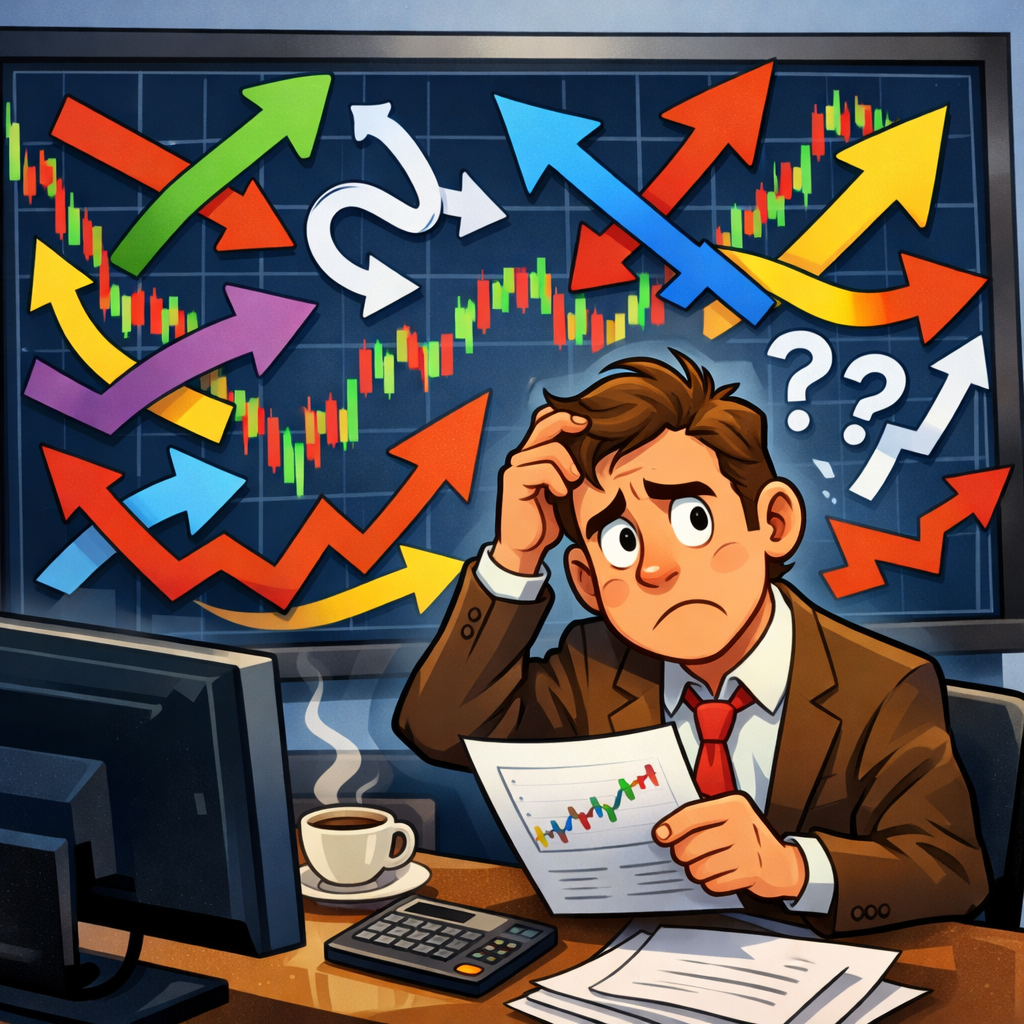
A fractured Fed, re-accelerating inflation, strong mega-cap earnings, and record buybacks are all colliding at once.
KEY TAKEAWAYS
-
The S&P 500 is sitting at an all-time high despite war, an oil supply shock, and a major disruption in the Strait of Hormuz. That disconnect makes the market look stronger on the surface than the macro backdrop suggests.
-
Growth is slowing while inflation is re-accelerating. Q1 GDP missed expectations, PCE moved higher, and energy prices are feeding directly into the inflation problem.
-
The Fed is stuck between two bad choices. Cutting rates risks fueling inflation, while hiking rates risks crushing an economy that is already slowing.
-
Mega-cap technology earnings remain the main support beam under the market. Microsoft, Alphabet, Meta, and Apple delivered strong numbers, but AI CAPEX keeps raising the question of how expensive this growth machine becomes.
-
Market breadth is disturbingly narrow. A small group of exceptional companies, record buybacks, and professional money are carrying the rally while the broader market is less convincing.
MY HOT TAKES
-
This is not a clean bull market. It is a narrow, quality-led rally happening inside a very messy macro environment.
-
The Fed does not have an elegant policy answer right now. Stagflation is the scenario where every lever comes with a cost.
-
The Mag Seven are still delivering, but investors are right to scrutinize the AI infrastructure bill. The revenue flywheel is working, but the tab keeps getting bigger.
-
All-time highs are not automatically an all-clear signal. They can also reflect concentration, buybacks, liquidity, and professional positioning.
-
The bond market’s silence should not be mistaken for approval. It may simply be watching before it speaks louder.
-
You can quote me: “Don’t confuse a narrow rally at all-time highs with a broad green light.”
Who knew? Well, it’s now in the past. One of the densest data weeks of the year–and at a key inflection point in the markets. The S&P 500 is at an all-time high! That’s right. All time high, while the US is engaged in an active war with Iran. The Strait of Hormuz has been essentially slammed shut by Iran, choking off some 20% of the world's crude oil supply. And it’s not just crude with a gummed up supply chain. There are many other essential commodities that cannot get through that extremely important supply chain choke point at the moment. Come to think of it, the supply shock is so extreme, it feels like something I would use as an example for undergraduate b-school students. Ok, students, what happens when you take a double-digit percentage of commodities supply out of the market? That’s right, prices go up. And what’s that called? Inflation. Something that is very much top-of-mind for EVERYONE at the moment, having just survived the worst inflation since the 1980s. AND survived one of the most aggressive monetary tightening regimes since just as long. We survived…barely. But here we are with a new supply shock and Fed at the ready–finger on trigger. If I asked any of those undergrads how they thought the market would react to this environment, what do you suppose they would say? That’s right, markets would sell off. But alas, they sit at their all-time highs. Let’s dig into some of the details and see if we can make heads or tails out of them.
Let’s start with the economic data, because the data doesn't lie–even when the market chooses to…well, ignore it. Q1 GDP came in at 2.0%, below the consensus expectation of 2.3%. Not a disaster, but not exactly a ringing endorsement of economic strength either, especially with crude north of $100 a barrel sloshing through every input cost in the economy. The real gut punch was on the inflation side. The PCE Price Index, which is the Fed's preferred inflation gauge. It jumped to 3.5% year over year in March, up from 2.8% in February. Core PCE, which is supposed to strip out the volatile stuff, rose to 3.2%--and both numbers are moving in the wrong direction. And the energy PCE component? It exploded 11.6% in a single month, March to February alone–which shouldn’t surprise anyone. My friends, that is not a rounding error. That is a price shock. So let's call it what it is: we have a slowing economy and re-accelerating inflation hitting simultaneously. My b-school students have a word for that too. It's called stagflation, and it is the Fed's absolute worst nightmare, because there is no clean policy response. You can't cut rates to bolster growth without pouring fuel on the inflation fire. You can't hike rates to crush inflation without risking a recession that's already quietly knocking on the door. The Fed is, to use a technical term…stuck.
Which brings us to the most dramatic FOMC meeting in over three decades. The Federal Reserve held rates at 3.5% to 3.75% for the third consecutive meeting–no surprise there. What was a surprise was the four-way dissent, the most since October 1992. And the dissents told two completely different stories. On one side, Fed Governor Stephen Miran voted to cut rates by a quarter point, keeping his dovish streak alive. On the other side, three regional Fed presidents –Cleveland's Beth Hammack, Minneapolis's Neel Kashkari, and Dallas's Lorie Logan– objected not to the hold itself, but to the easing bias language that remained in the statement, signaling they want no part of any suggestion that rate cuts are coming. That's a split committee if I've ever seen one, and it sets a fascinating table for the incoming chair. Speaking of which, Kevin Warsh cleared the Senate Banking Committee on the same day as the meeting, and a full Senate floor vote is expected next week. Warsh almost certainly chairs the June meeting. He walks into a room where three of his colleagues just sent him a very public memo: don't even think about cutting rates.
And then there is the Powell subplot, which is genuinely one for the history books. After his term as chair ends next Friday, Powell announced he intends to remain on the Fed's Board of Governors–an arrangement not seen since Marriner Eccles in 1948, nearly eight decades ago. Fed HQ is named after Eccels–the very same HQ Powell is being accused of spending too much on. Guys, you can’t make this stuff up. 🤣 That’s right, Powell cited the Justice Department's investigation into Fed headquarters renovation costs, essentially saying he won't leave under a legal cloud. Love him or not, you have to respect his stubbornness. The futures market certainly noticed. The probability of a rate hike by year-end jumped from essentially zero before the meeting to over 11% in its immediate aftermath. The rate-cut trade that Wall Street had been gently nursing? It's on life support.
Now let's talk about the part of the week that actually made people feel good–rightly so. The Magnificent Seven delivered! Um…mostly. Microsoft posted $82.9 billion in revenue, up 18%, with Azure growing 40% year over year and its AI business surpassing a $37 billion annualized revenue run rate, up 123%. Alphabet's cloud division grew 63% year over year, well ahead of estimates. Meta reported $56.3 billion in revenue, up 33%, with net income jumping 61%. Apple, the week's closer, beat on earnings and revenue and gave better-than-expected guidance for the current quarter. Those are genuinely strong numbers. The market's hangover came not from the earnings themselves but from the CAPEX disclosures attached to them. The four hyperscalers are collectively on pace to spend somewhere in the neighborhood of $725 billion on AI infrastructure in 2026. Microsoft alone guided to $190 billion in capital expenditures for the calendar year. Meta raised its full-year CAPEX guidance to $125 to $145 billion, up from its prior range. Amazon is holding firm near $200 billion. The market's lingering question–and it is a fair one–is whether the revenue flywheel ever catches up to the infrastructure bill. So far, the answer has been yes. But the tab? Well, it keeps growing.
Now, here is the part that should give serious investors pause, even as the headline numbers look great. The rally to all-time highs is real, but it is narrow. Disturbingly narrow. Market breadth has fallen to one of the tightest levels in decades outside of the dot-com bubble. The gains are concentrated in a handful of names while the median S&P 500 stock sits well below its own highs. Meanwhile, hedge funds had a strong quarter–and they made money on both their long and short books, which tells you the professionals are playing both sides of this tape with skill. Commodity trading advisors (CTAs) had a strong quarter as well, systematically riding the trends that oil prices and volatility created. And corporate buyback authorizations have hit a record pace this year, with the repurchase window now reopening after earnings blackout, which means there is a technical tailwind coming into a market that is already at highs. All of that context matters when you are trying to understand how you get to all-time highs in the middle of a war, a supply shock, a fractured Fed, and a GDP print that missed expectations.
So where are we? We are in a market that is being carried by the earnings power of a small group of genuinely exceptional companies, lubricated by record buybacks and professional money that knows how to navigate chaos. The macro backdrop is genuinely difficult. Basically, we have slowing growth, re-accelerating inflation, a Fed that cannot move cleanly in either direction, and a new chair who is about to inherit all of it. The Hormuz situation remains the wild card under everything. If it resolves, energy prices fall, inflation cools, and the Fed gets breathing room. If it doesn't, the stagflation pressure compounds. Educated investors don't need to guess which way it goes, they need to be positioned for either outcome. In a toss-up environment, quality names are always a safe bet. Respect the macro. Don't confuse a narrow rally at all-time highs with a broad green light. And whatever you do, don't mistake the silence of the bond market for agreement. It is watching. That is what I will be watching this week. Did I mention that this week is a data-dense week with extremely important earnings and labor market numbers?
FRIDAY’S MARKETS
Friday's markets closed the week and the month on a high note, with the S&P 500 adding 0.29% to close at a record 7,230, while the Nasdaq surged 0.89% to close above 25,000 for the first time ever. The Dow was the odd man out, slipping 0.31% to close at 49,499. Apple led the charge, jumping over 3% on a strong earnings and revenue beat with better-than-expected guidance, while energy giants ExxonMobil and Chevron both beat earnings estimates. Crude oil ended the week near $102 a barrel, down slightly on the day but still holding well above the $100 level as Iran negotiations remained stalled.
NEXT UP
-
Factory Orders (March) is expected to have increased by 0.5% after remaining flat in February.
-
Durable Goods Orders (March) is likely to come in at 0.8% in line with prior estimates.
-
Later in the week we will get a continued parade of important earnings announcements in addition to PMIs, housing numbers, JOLTS Job Openings, ADP Employment Change, monthly job numbers, and University Michigan Sentiment. All important–all market-movers–so you better check in every day so you don’t miss a beat.

 service@siebert.com
 Siebert Financial (800)872-0444