
.png)
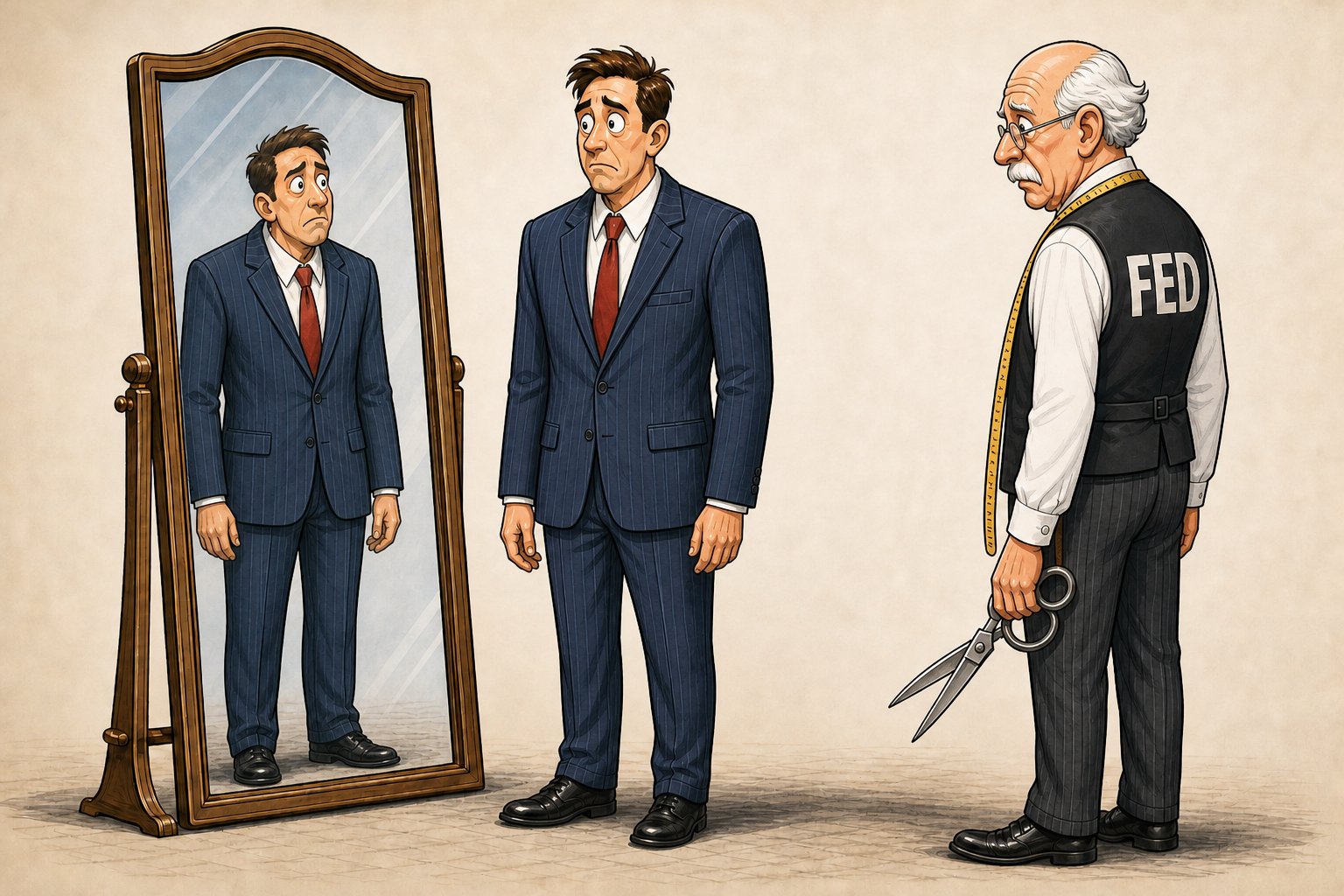
Stocks see AI as an earnings engine. The Fed sees an inflation risk—and both perspectives may be right.
KEY TAKEAWAYS
-
The Fed’s September minutes pointed toward another possible rate increase this year. However, the subsequent weak jobs report made those expectations look dated almost immediately.
-
AI investment is emerging as a persistent source of inflation pressure. Demand for chips, transformers, electricity, and data-center capacity may be running ahead of available supply.
-
The AI boom may also be contributing to higher long-term interest rates through increased borrowing. That means it could be raising both the cost of goods and the cost of money.
-
Equity and bond markets are interpreting the same AI buildout differently. Stocks are focused on future earnings, while the Fed and bond market are focused on present costs and inflation.
-
Investors should examine how dependent their portfolios are on a small group of AI stocks and falling interest rates. A durable portfolio must be designed for changing economic conditions rather than today’s snapshot.
MY HOT TAKES
-
The weak jobs report changes the timing of the Fed’s next move, but not necessarily the longer-term rate story. Cyclical weakness can buy time; it cannot eliminate structural inflation.
-
AI should not be viewed solely as a technology or earnings theme. Its enormous demand for physical infrastructure makes it an energy, capital, and inflation story too.
-
The continued rise in the 10-year Treasury yield after a soft jobs report is an important signal. The bond market appears more concerned about enduring capital demand than the Fed’s next meeting.
-
Record equity prices and historically high long-term yields can coexist because markets are pricing different sides of the same boom. AI can increase corporate profits while simultaneously making capital more expensive.
-
Investors should prepare for the economy they are likely to encounter, not optimize around the latest data point. The best portfolios, like the best bespoke suits, have quality foundations and room for change.
-
You can quote me: “The Fed is telling us that the AI boom isn't just pushing up the price of your next phone or your next electric bill. It may be pushing up the price of money itself.”
Moving targets. Ok, this is the last blogpost in the lead up to my son’s wedding, and while I am desperately trying not to bore you with MY life, it is–alas–my life, which is, as you might imagine, very much centered around that event right now. I, in fact, pledged to myself the other day “no more wedding talk in the blog, Marko,” but I had an experience yesterday afternoon that I just had to share with you, because the fit was perfect for this morning’s topic. You could say it was almost perfectly tailored.
I was at my tailor last night for the final, final…final fitting for my suit and tuxedo. For those of you that don’t know, fit is EVERYTHING for a bespoke suit. You are paying for the material, of course, but the big expense is really the tailoring. The skill of the person behind thread, needle, thimble, and…well, tape-measure and chalk. One has to be patient to get one's money's worth. This amounts to many fittings before the suit’s final pressing and journey home to the armoire. In fact, getting my children out of the hospital after birth was less in-depth. For me, it is worth the time and expense, because–as you know if you have been following my blogposts–I have suits from decades ago that still fit perfectly and will likely last many decades more. You get your money’s worth, for sure.
Ok, so last night, I was standing in front of the mirror. My tailor–standing behind me, chalk in hand–laser-focused on the finest of details. My focus was on the tailor’s apprentice standing at the other side of the shop. He was working with another client–an older gentlemen. Now, it is quite common for a tailor to adjust garments years after they are made–one of the benefits of a bespoke suit. This one, though, was different. The client had what seemed to be almost a whole wardrobe full hanging next to the mirror. I noticed the tailor pinning the seat of the pants, the waist, as well as the back of the coat. I was curious, because I witnessed a similar event just a few days earlier with a different client. I perked up my ear. The apprentice said something like “that’s about an inch and a half–the rule of thumb is 1 inch for every 9 pounds or so.” My mind immediately leapt to my portfolio which contains a pharma company that is known for its QUITE successful GLP-1. 🤣 This post is not about that–stay with me. The apprentice then said, “I will take out about 2 ½ inches, so that it will fit you for the holidays.” WOW! I asked the tailor discreetly if this was a common practice, and he told me that it has become the new norm. “It’s a moving target!”
A moving target. I chewed on that the whole ride home.
Because the thing a great tailor understands–and the thing most of us forget–is that he is not cutting a suit for the man standing in front of the mirror. He is cutting it for the man who will show up wearing it. At the wedding. At the holidays. A decade from now. The mirror only tells you where you ARE. The tailor's job is to figure out where you are GOING.
Hold that thought, because just yesterday afternoon the Federal Reserve showed us its own measurements.
The Fed released the minutes (the detailed write-up of the committee's discussion, published three weeks after each meeting) from its September 15th and 16th meeting. That is the meeting where it raised its benchmark rate by a quarter point, to a range of 3.75% to 4%–the first hike since 2023.
The vote was unanimous. And not just the twelve voters, mind you–every single participant in the room backed the move. Most of them judged that another increase would likely be “appropriate” by year end.
The reason was inflation. Fed policy makers estimated that prices rose 3.8% in August from a year earlier–nearly double the Fed's 2% goal–and projected that inflation would not get back to 2% until 2029. Twenty-twenty-nine! Energy was the central worry, with oil prices pushed higher by the conflict in the Middle East. Many officials warned that the longer those prices stay high, the more likely they bleed into everything else.
The committee's projections (the so-called "dot plot," where each official marks where they think rates are headed) showed sixteen of eighteen participants penciling in at least one more hike this year. Chairman Warsh, by the way, once again declined to submit a dot of his own. A tailor who won't write down his own measurements. Make of that what you will. 😉
Those were the measurements. Now let's talk about the fit.
Here is the problem with minutes–they are a reflection in a mirror that is three weeks old.
At the September meeting, a majority of officials believed the jobs market had gotten stronger. Then, on October 2nd–last Friday, the September jobs report walked into the atelier. Employers added just 29,000 jobs–twenty-nine thousand–and the unemployment rate climbed to 4.2%.
The market reached for the chalk immediately. About a week before the report, traders were pricing something close to a 70% chance of another hike at the October 27th–28th meeting. Now it is somewhere around one in five. And the "by year end" language in the minutes gives the Fed all the room it needs to wait until December, with two more months of jobs and inflation data in hand.
So that part of the minutes? Already out of date.
In the early fittings, a bespoke jacket is held together with loose white thread–basting stitches–designed to be pulled out once the tailor sees how the cloth really hangs. The Fed's read on the labor market was a basting stitch. And it is already coming out.
If you stopped reading the minutes there, you would conclude the Fed is about to take a breather. Maybe it is. But you would miss the most important thing in the document.
Because some of what the Fed measured isn't stitching at all. It's the cloth. Tucked inside the minutes is a newer source of inflation pressure–artificial intelligence. Fed policy makers attributed part of the rise in inflation to higher prices for technology-related consumer goods tied to the AI buildout. Some officials went a step further and warned that AI investment could push demand ahead of supply (economist-speak for too many buyers chasing too few chips, too few transformers, and too few megawatts). Policy makers had already raised their inflation projections for 2026 through 2028, and the AI buildout was one of the reasons they gave–right alongside tariffs and geopolitics.
Then came the detail that made me place the cap on my fountain pen for a prolonged thought interval. A few officials pointed to heavier AI-related borrowing as one of the reasons long-term interest rates have been climbing.
Read that again–go on, I can wait. The Fed is telling us that the AI boom isn't just pushing up the price of your next phone or your next electric bill. It may be pushing up the price of money itself.
This isn't the first time, either. AI showed up as an inflation concern in the minutes from June, and again in July, when several participants said AI investment was having a broader effect on prices. Three meetings under Chairman Warsh. Three sets of minutes. AI in all three. That is not a basting stitch. That is the fabric.
Now here is where it gets interesting–and a little ironic. The very same AI story the Fed is fretting about is the one that has the stock market celebrating. Just a few days ago, the S&P 500 closed at a record–above 7,800 for the first time ever–and the Nasdaq set a record of its own, led by none other than NVIDIA and AMD. Meanwhile, the 10-year Treasury yield (the rate that drives mortgages, car loans, and the hurdle every stock has to clear) had closed Monday at 5.31%, its highest level in 24 years, and this morning’s read is north of that at 5.34%.
The Fed even acknowledged the disconnect. At the September meeting, officials judged that financial conditions were still supportive of growth, pointing to strong stock prices and narrow corporate credit spreads (the extra interest companies pay, above Treasuries, to borrow).
So we have two people looking at the same suit. The stock market sees AI as an EARNINGS story. The Fed sees AI as a COST story. Both of them are right. That is the problem. Here is what I think most people are missing.
A weak jobs report is cyclical. It comes and it goes. It can buy the Fed a month, maybe two. The AI buildout is structural. It does not pause for a payroll print. It does not care whether the Fed meets in October or December. The data centers are being built, the chips are being ordered, and the power is being contracted–regardless.
And look at the sequence. The weak jobs report landed on October 2nd, and the odds of an October hike collapsed. Yet the very next Monday, the 10-year yield hit that 24-year high anyway. The bond market got the "soft" news it was supposedly waiting for–and still demanded MORE to lend money for ten years. That tells me the bond market is not taking its cues from what the Fed does in October. It is pricing the fabric, not the stitching. A soft patch in jobs buys the Fed time. It does not buy relief.
And as is so often the case, the bill does not land evenly. The minutes noted that higher energy costs are weighing most heavily on low and moderate-income families. The people who feel a moving target the most are the ones with the least slack in the budget.
So what does this mean for your portfolio? I am not going to tell you what to buy or sell–but there are a few questions I would be asking myself right now.
Am I treating AI only as an earnings story, and ignoring that it is also a cost story–one that could keep interest rates higher for longer than I expect? How much of my portfolio's recent gain depends on a handful of AI names? And how much of my plan quietly depends on long-term rates coming back down soon?
The next measurements arrive quickly. September's CPI / Consumer Price Index comes out on October 14th, and I will be reading past the headline into the technology goods and electricity numbers–those are the AI fingerprints. Then the Fed meets on October 27th and 28th. Another fitting. Same tailor. Same moving target.
Now, I don't want to leave you thinking AI is the villain of this story. It isn't. The optimist's case–and I count myself among the cautious optimists–is that today's buildout costs become tomorrow's productivity gains, the kind that let an economy grow faster without overheating. That may very well happen. It just hasn't happened…er, YET. And in the meantime, there is a silver lining for savers–with a 10-year yield above 5%, they are finally getting paid to wait.
Which takes me back to that older gentleman at the other end of the shop. His tailor didn't cut his suits for the man in the mirror. He took out two and a half inches for the man who will show up at the holidays. He wasn't guessing–he was reading the trend.
That is the job. For the tailor. For the Fed. And frankly, for every investor. My suits from decades ago still fit not because I never changed, but because they were built with good cloth and a little room for the future. A good portfolio is no different. Don't fit it to the mirror. Fit it to the person who is going to show up.
As for me–the suit and the tuxedo are fitting perfectly, and the final pressing is on its way to the armoire. The economy, on the other hand? Well, it’s still a moving target.
YESTERDAY’S MARKETS
Stocks retreated from record highs yesterday. The S&P 500 fell 0.22%, the Nasdaq slipped 0.22%, and the Dow dropped 341 points, or 0.66%, to 51,179, while the Russell 2000 lost 1.31%. In the bond market, the 10-year Treasury yield touched its highest level since 2002 and the 30-year yield hit 5.7%, a 24-year high, as oil rose back toward $100 per barrel. Minutes from the Fed's September meeting showed officials leaning toward another rate hike before the end of the year.
NEXT UP
-
Initial Jobless Claims (October 3rd) is expected to come in at 200k, a touch higher than last week’s 197k claims.
-
Today’s Fed speakers include Waller, Kashkari, and Musalem.

 service@siebert.com
 Siebert Financial (800)872-0444