
.png)
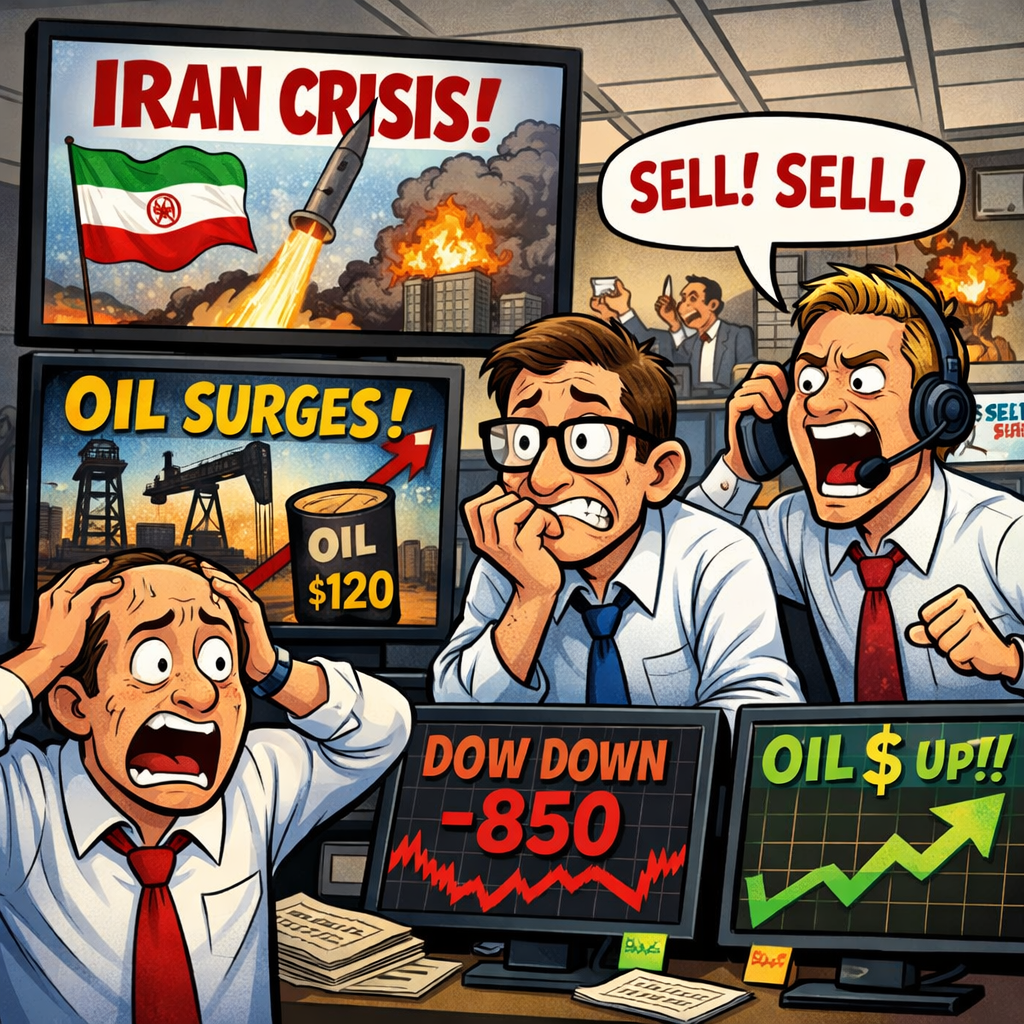
Rising oil prices are only the first derivative of this geopolitical crisis. The real risk lies in how long it lasts.
KEY TAKEAWAYS
-
Oil prices have surged toward $90 as Middle East tensions intensify, representing a rapid and structural repricing of energy markets rather than a typical geopolitical tremor. The speed of the move reflects how unprepared markets were for a conflict that escalated gradually rather than through a sudden shock.
-
Prediction markets suggest a meaningful probability that the conflict will last for months rather than weeks. The longer the disruption persists, the more economic damage accumulates through higher energy prices, inflation pressure, and slower economic activity.
-
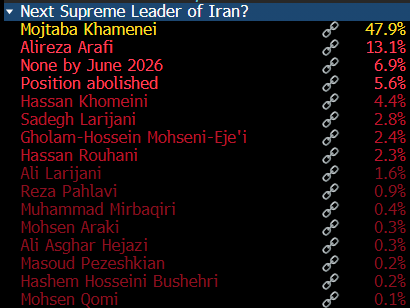
Iran’s leadership transition introduces a major geopolitical wildcard that could prolong instability. With hardline candidates dominating succession probabilities, the path to diplomatic resolution appears increasingly narrow.
-
Sustained oil prices near or above $90 could materially impact inflation expectations and eliminate hopes for near-term Federal Reserve rate cuts. This becomes particularly important given historically high equity valuations.
-
The economic and market impact of an extended energy shock would vary significantly by sector. Energy and defense may benefit while airlines, logistics, consumer discretionary, and rate-sensitive growth stocks face structural headwinds.
MY HOT TAKES
-
Markets consistently underestimate the duration risk of geopolitical conflicts. Price reactions initially focus on supply disruptions while overlooking how prolonged instability compounds economic damage.
-
Energy shocks remain one of the fastest mechanisms for transmitting geopolitical risk into inflation and monetary policy. A sustained increase in oil prices can quickly alter the entire macroeconomic narrative.
-
Political transitions inside adversarial regimes often produce more extreme leadership before moderation emerges. This dynamic can significantly extend the timeline for conflict resolution.
-
High-valuation equity markets are especially vulnerable when inflation reaccelerates and monetary easing disappears. Without the prospect of rate cuts, the justification for premium multiples weakens.
-
Market volatility during geopolitical crises often creates mispricing rather than permanent impairment of value. Long-term investors who maintain discipline can find attractive entry points in fundamentally strong companies.
-
You can quote me: “A ninety-dollar oil environment doesn’t just move commodities—it rewrites the entire inflation narrative.”
Well enough alone. The price of oil has spiked. There. Are you surprised? Of course you aren’t. We know that the price of oil is highly sensitive to the news cycle, especially if it involves friction in the Middle East. Sadly, friction in the Middle East is something that the markets deal with on a daily basis. Bots and traders are always scouting for a random news headline about escalation or deescalation in the region. Those moves are well understood and markets have become somewhat desensitized to the tremors as they have become so common.
This recent conflict is something different than what we have seen altogether. Rather than a flair-up, the current conflict slowly increased in intensity. I think of it like a lobster being placed in a pot of cold water set on a stove–the heat slowly increases without it realizing–until it is too late. The reason I used this irksome analogy is because I think the markets, for some strange reason, were taken a bit by surprise, which greatly intensified the reaction. Brent crude futures are trading close to $90 this morning. In case you forgot, Brent started 2026 in the high 50s. In fact, just a few weeks ago when I first shared my Iran conflict playbook (link here: https://blog.siebert.com/wargames-war-risk-and-wall-street), crude was around $67. I share three different scenarios of the possible conflict. Overnight/one-and-done, akin to last June’s Midnight Hammer, multi-week, and drawn out. Since then I have refined that to DEFCON 1, 2, and 3.
I penned that note at a time where the temperature was rising, though it wasn’t clear if it would ever reach a boiling point. And, this is one of those times, where I wish that I wasn’t right about how the ultimate conflict played out. This morning, it appears quite likely that markets are starting to factor in DEFCON 3–a drawn out conflict. When I originally shared my strategy with you, I assessed DEFCON 1 to have a high probability based on the administration's past actions and the predictions markets.
Not surprisingly, markets have been quite volatile this week as they attempt to digest the broad range of information flow–most of which is inconsistent. The “unknowns” have once again infected the markets. With that, I think it appropriate to dig into an updated playbook. First, take a look at the following chart of Brent Crude futures to get an idea of magnitudes.
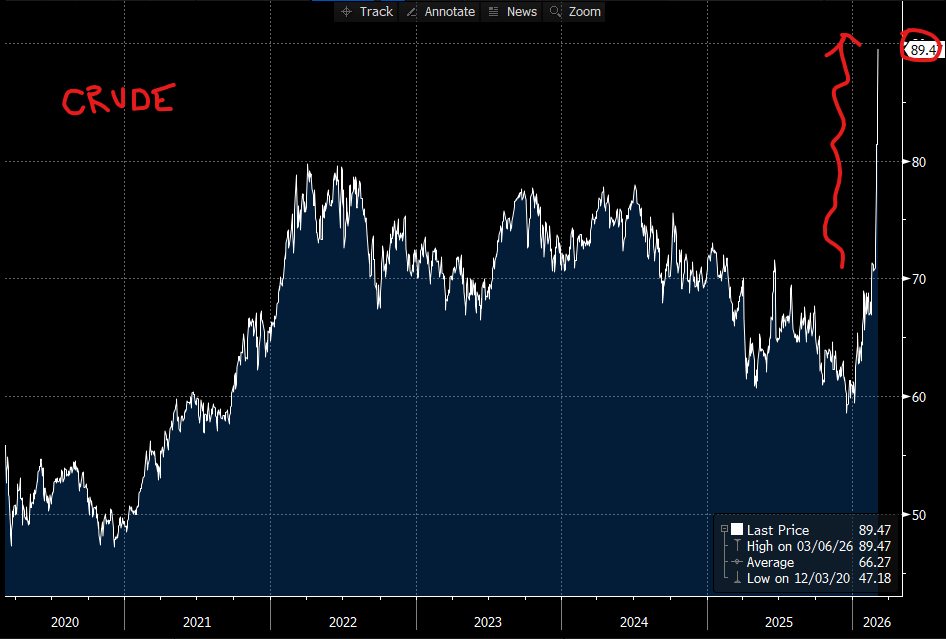
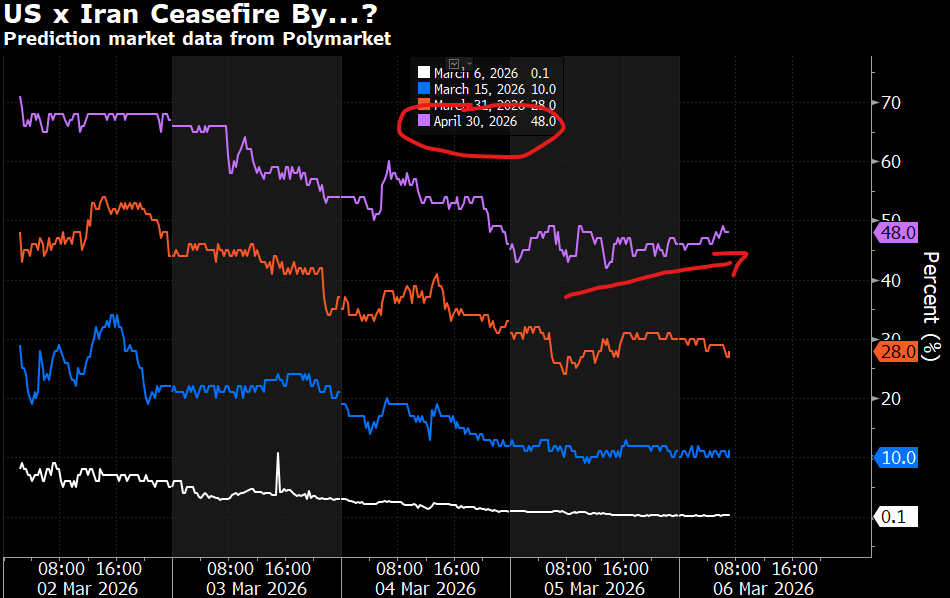
This Crude chart tells you everything you need to know about how fast this repricing happened. WTI hit $89.47 this morning–beyond even the post-Ukraine invasion spike of 2022–coming off a base in the low $60s just weeks ago. That is not a geopolitical tremor. That is a structural repricing event. The Polymarket ceasefire data (on the chart that follows) is equally instructive, and frankly more important for the investment thesis. The probability of a ceasefire by March 6 is essentially zero. By March 15, only 10%. By March 31, 28% (red line). The number that should have your full attention is April 30 at 48% (purple line)--and that line is rising. What the market is quietly admitting is that there is a near-coin-flip chance this conflict runs well past April. And the critical question nobody seems to be asking is: what happens to the damage model if it does?
YESTERDAY’S MARKETS
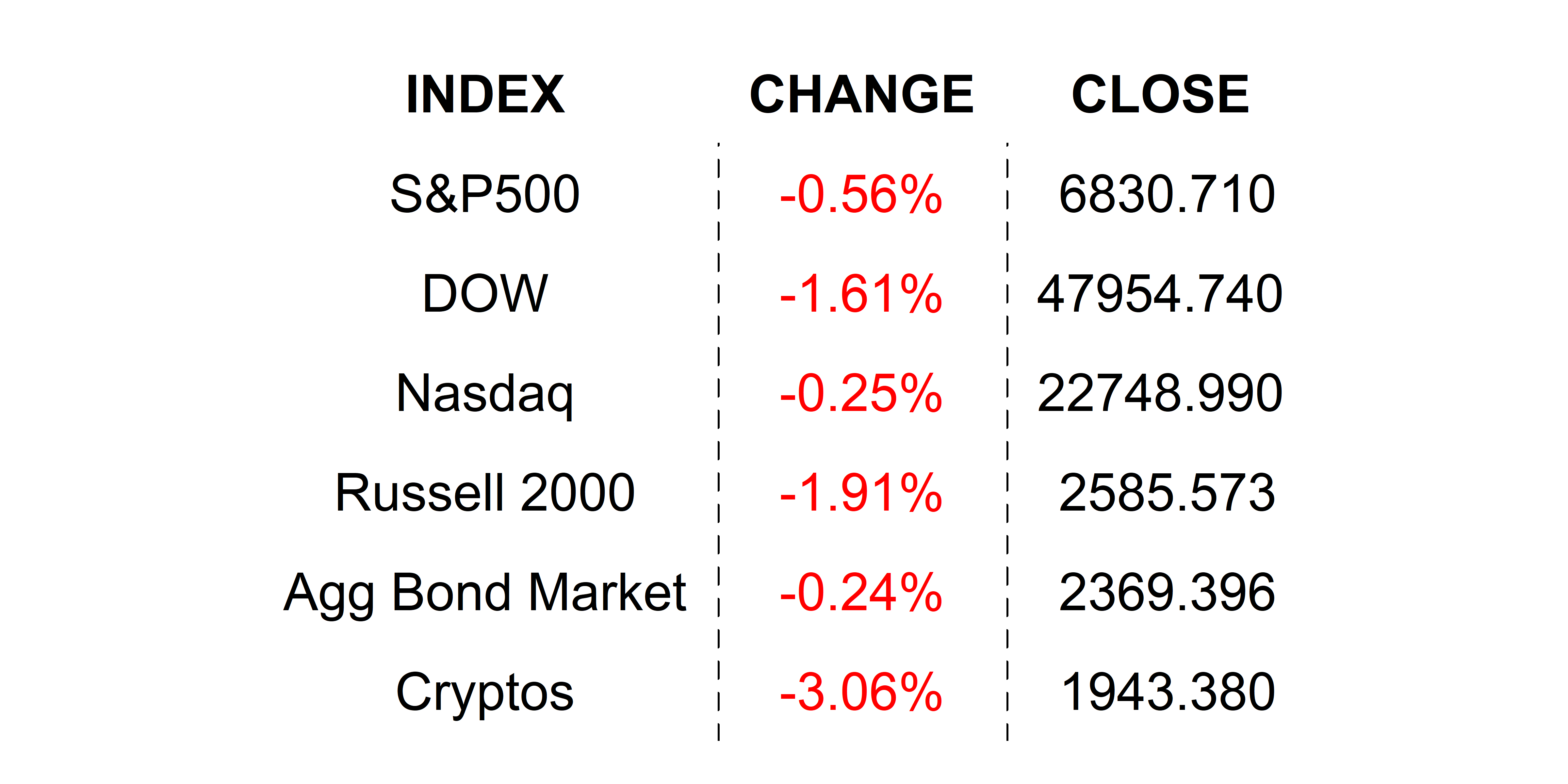
Yesterday was a painful day for equities as the realities of rising oil with the ongoing Iran conflict came home to roost, panicking traders. Later in the session reports surfaced that the administration would require permits to sell AI-related tech outside the US. As expected, tech–and everything else–took it straight in the gut. While stocks closed deeply in the red, they closed off the lows of the session. Another day of chaos caused by the news.
NEXT UP
-
Non-farm Payrolls (February) fell by -92k, far below estimate expecting 55k in gains, and below last month's 128k downward-revised print. Wake up Fed.
-
Unemployment Rate (February) rose to 3.8% from 3.7%, worse than expected.
-
Retail Sales (January) slipped by -0.2% after being flat in December.
-
Fed speakers today: Waller, Daly, Goolsbee, Paulson, Schimd, Miran Collins, and Hammack, but they have to all shut starting tomorrow, because they are in a press blackout ahead of the FOMC meeting.
-
Next week: more earnings and whole lot more including CPI, housing numbers Personal Income, Personal Spending, PCE Price Index, GDP, University of Michigan Sentiment, and JOLTS. You better check in on Monday to get your calendars–you won’t want to miss a single print next week–trust me.


 service@siebert.com
 Siebert Financial (800)872-0444