
.png)
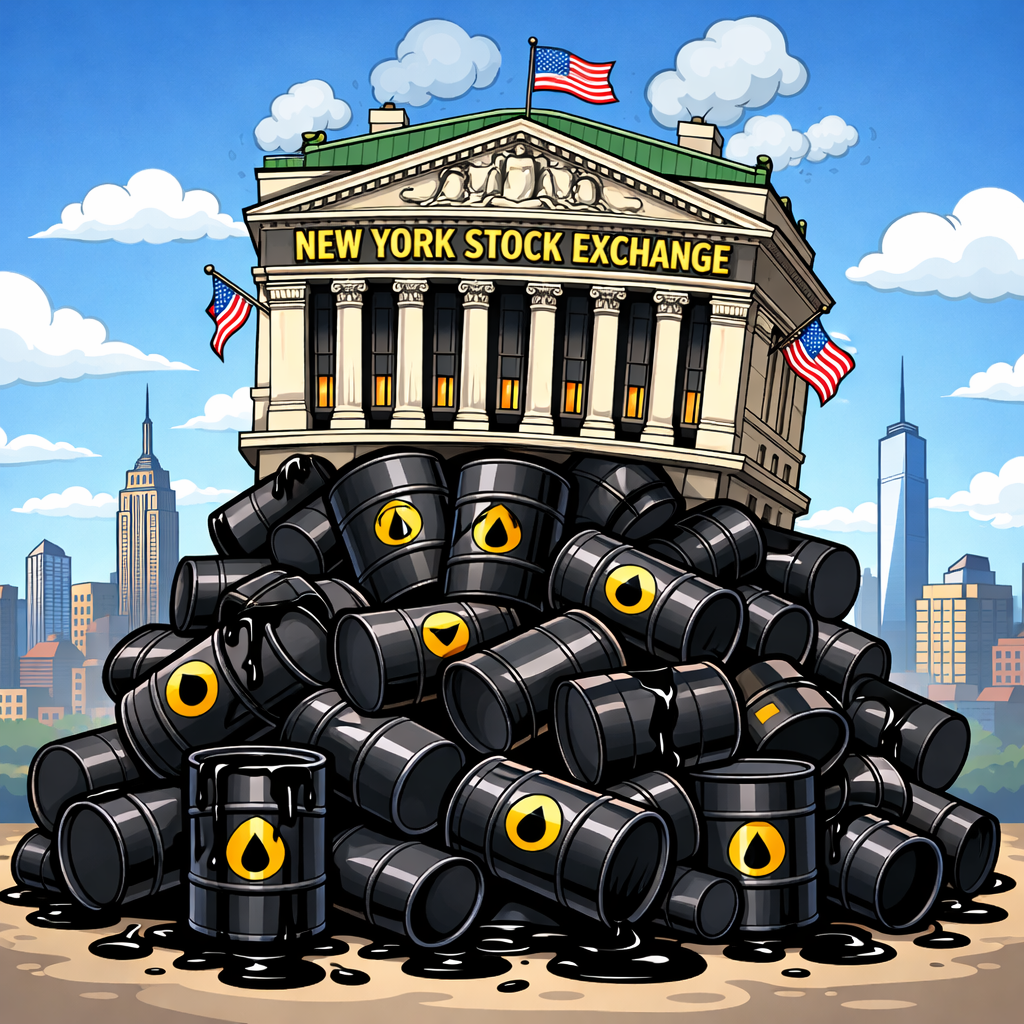
A conflict in the Middle East is reminding investors that oil still drives the global economy—and market volatility.
KEY TAKEAWAYS
-
Oil still sits at the center of the global economy whether investors want to admit it or not. The recent surge in crude is a reminder that energy shocks ripple through transportation costs, inflation expectations, interest rates, and ultimately equity valuations.
-
The market reaction is not just about oil companies. Higher crude prices are spilling into other sectors like transportation, financials, and semiconductors because investors are reassessing systematic risk across the entire economy.
-
Geopolitical conflicts today do not require massive military engagements to disrupt markets. Even small asymmetric threats to chokepoints like the Strait of Hormuz can move global energy prices and trigger volatility across financial markets.
-
Systematic risk is something investors cannot diversify away. Even strong companies with excellent earnings and guidance can sell off when the market begins repricing macro risk.
-
Periods like this expose investor complacency. When volatility rises quickly, investors who never fully understood the businesses they owned are forced to make decisions under pressure.
MY HOT TAKES
-
Oil is still the hidden plumbing of the global economy. Investors who pretend otherwise because of the energy transition are misunderstanding one of the most powerful drivers of inflation and market volatility.
-
The current market weakness is not necessarily a sign that companies are deteriorating. It is the market repricing risk in response to geopolitical uncertainty and higher energy costs.
-
Modern geopolitical risk is highly asymmetric. A single cheap drone can threaten shipping lanes that move a fifth of the world’s oil supply, which means volatility around energy is likely to remain structurally elevated.
-
Investor complacency built during years of low volatility is being exposed. Many investors bought stocks simply because they were rising rather than because they understood the businesses behind them.
-
Volatility itself is not the enemy. For investors who have done their homework, volatility often creates the best opportunities to buy strong companies when systematic risk temporarily drags everything lower.
-
You can quote me: “Complacency is exposed quickly in environments like this.”
Always look at the bright side. We live in exciting times. Of course, the word exciting means different things to different people–and it is not always good. There is nothing like a geopolitical cluster bomb going off in the middle of the world's most sensitive hotspot. It isn’t just ground zero for clashing political ideologies but also religious ideologies. And all that sits right on top of one of the lynchpins of the world’s energy markets; it’s an economic hotspot. Boom.
First things first, I will start with my oft repeated quote: “oil IS the oil of all industry!” I don’t care which side of the “green” debate you land on, but do me a favor, if you want to not lose money, please acknowledge that oil is extremely important to the global economy. You have solar panels and drive a Tesla? Good on you! Do what you can–I am all about that, but please remember that your comfy workout pants came from crude oil, it was delivered to your local mall in vehicles principally powered by diesel fuel, and some of the food you eat is fertilized with crude oil by-product. I know that Amazon uses electric powered trucks. Awesome–I love Amazon. Those trucks drive on streets paved with crude oil by-products. What? You avoid all that stuff and choose all natural? Also, great. Good job. Have you checked your portfolios lately? Say, in the past week or so? To be clear, I am not taking sides on any of this stuff–just maybe the stuff about not losing money. You can count on me to always land on the side of trying to not lose money. 😉
With that said and hopefully duly noted, let us begin with recognizing where we are in this Iran crisis. I have seen all the flir-tinted video loops of airplanes, ships, missile launchers, and bunkers exploding. I have heard that we won with nothing left to blow up, and yet this morning I see crude oil trading in the high 90s after starting yesterday in the high 80s. By the time I finally put my iPad down last night, crude was trading over $100! At the time I started writing this missive, stock futures are pointing to an opening in the red.
Stocks that have been absolutely killing it in performance, guidance, and just about every measure imaginable, are under heavy pressure. Sure there are plenty of stocks that will likely open well in the green this morning, though most of them are in the energy and materials sectors–benefiting from the sharp rise in crude. Top losers in the premarket are dominated by transportation stocks that rely on petroleum–which kind-of makes sense. Higher input costs mean strained margins. We like un-strained margins. 😉
Also on that biggest losers list are a bunch of financial sector companies. They are there because of the lingering fear of credit strain. You know, the cockroaches that Jamie Dimon warned of last year. A few more have been spotted recently and it seems that investors are getting antsy and trying to get their money out. This, of course, puts a strain on managers who, in some cases, are forced to liquidate assets to cover redemptions.
An increase in redemption requests forces managers to reckon with the gulf that exists between what their assessed, model-based valuations are and what they are ACTUALLY worth based on the market. And that gulf seems to be widening because of a problem happening in another gulf, some 8,000 miles away. Did you get that? Financial companies that are not necessarily gas-powered are under stress because of rising crude oil prices! Ok, ok, it’s because of systematic volatility!
Let’s get basic. Your stocks are subject to two different types of risks. Systematic risk (or market risk) and idiosyncratic risk (company-specific risk). You can minimize idiosyncratic risk by diversification–good news! But you have to take systematic risk on the chin, as all boats fall with ebbing tide. So, this war in the middle east is causing lots of volatility and that has investors on edge. There is simply nowhere to hide from this volatility. It tests one’s conviction from every angle. Believe me, I am right there with you. You have to sharpen and re-sharpen your pencil constantly. I like to joke that over the last year or so, my desk has been littered with lots of pencils sharpened all the way down to their erasers.
Investor complacency, in my opinion, is more dangerous than those cockroaches Jamie Dimon so famously warned us about. Not every investment will turn out to be a winner. You simply can’t avoid making some bad choices. Conditions change, mistakes are made by management. When you invest in a company, you are taking on risk. The bigger the risk the bigger the expected return. That encourages us to take risk.
Take risks, but only take risks you understand.
That line sounds simple–almost obvious–but it becomes much harder when markets get jumpy like they are today. When volatility spikes, when crude oil jumps ten dollars in a matter of hours, when geopolitical headlines start hitting your phone every fifteen minutes, conviction gets tested. This current environment is exactly that kind of environment, and the uncomfortable truth is that this volatility cannot really be avoided.
Iran does not need to close the Strait of Hormuz with an armada of battleships. It does not need to mine the entire waterway or fire missiles at every tanker that sails through it. The uncomfortable reality is that it doesn’t take much at all. One drone. One cheap drone with a bomb strapped to it. One guy with a bad attitude and an inexpensive hobby is enough to disrupt shipping traffic that moves roughly 20% of the world’s seaborne oil supply.
Think about the asymmetry of that for a moment. One fifth of the most important commodities in the global economy can be threatened by something that fits in the trunk of a car. That is the reality of modern conflict. You no longer need a massive navy to disrupt a shipping lane. You simply need uncertainty. You need fear. If insurers hesitate to cover tankers and shipping companies begin to rethink sending vessels through a narrow passage that suddenly feels exposed, the market reacts long before a single ship is actually sunk. That is enough to move prices.
And it does not just move energy prices. This is where investors sometimes get tripped up. They see oil moving higher and think, “Well, I don’t own oil companies.” Unfortunately, that is not how this works. Oil touches everything. Higher energy prices translate into higher transportation costs, higher manufacturing costs, and higher input costs across the economy. Those higher costs feed inflation fears. Inflation fears influence interest rate expectations. Interest rate expectations influence equity valuations.
Before long, stocks that have nothing to do with oil begin to move because of something happening thousands of miles away in a narrow stretch of water most people could not find on a map. Semiconductor companies feel it. Financial companies feel it. Transportation companies certainly feel it. Suddenly your entire portfolio seems to be reacting to a conflict in the Middle East.
This is exactly why you are seeing some of the strongest companies in the market under pressure this morning. Companies with excellent products, strong earnings, and credible guidance are still getting sold. That does not mean those companies suddenly became bad businesses overnight. It simply means the market is repricing risk as it processes new information.
And that process is rarely smooth. Volatility feels uncomfortable because it forces investors to confront uncertainty. Prices move quickly. Narratives shift. Headlines get louder. It can feel as though something in the market has broken. But volatility is not a malfunction of markets. It is the mechanism by which markets absorb new information and adjust expectations about the future.
When a geopolitical conflict threatens the stability of one of the world’s most important energy corridors, the market has to recalibrate. That recalibration is messy. Prices move quickly, sectors rotate, and investors begin reassessing the risks embedded in their portfolios.
This is where the shakeout begins. Weak hands get shaken out first. The investors who bought stocks simply because they were going up suddenly become uncomfortable. The investors who chased stories rather than studying businesses begin to question their decisions. Positions that were built on optimism rather than analysis start to feel fragile when volatility rises.
Complacency is exposed quickly in environments like this.
Investors who never asked basic questions about the companies they owned suddenly find themselves scrambling for answers. How much debt does the company carry? Does the management team have a track record of navigating difficult periods? Is the business model durable if economic conditions tighten? Those questions feel a lot more urgent when markets stop moving in a straight line upward.
That discomfort forces decisions. Some investors panic and sell. Others realize they never fully understood what they owned in the first place. Capital begins to flow away from weaker companies, weaker balance sheets, and weaker management teams. Stories that sounded great during periods of easy liquidity suddenly look far less compelling when uncertainty rises.
That process may feel chaotic, but it serves a very important purpose. Markets are incredibly efficient at exposing weakness. Companies with fragile business models eventually get revealed. Companies carrying too much leverage get tested. Management teams that overpromised eventually face scrutiny. What looked like a brilliant story during calm markets sometimes turns out to be little more than a well-designed slide deck when conditions change.
That is the shakeout. And despite how uncomfortable it may feel, shakeouts are healthy for markets. They clear out excess optimism and redirect capital toward stronger companies with more durable businesses. Firms with real earnings power, disciplined leadership, and credible long-term strategies begin to stand out more clearly once the noise settles. Those are the companies that ultimately emerge stronger after periods like this.
History has shown this time and again. Moments of heightened volatility often feel unbearable while they are unfolding. The headlines grow darker, the narratives become more dramatic, and the temptation to retreat becomes stronger. Yet if you step back and examine markets over time, these difficult periods often create the conditions that allow the next phase of growth to emerge.
Why? Because weaker players are forced out, stronger players gain share, and investors become more disciplined about where capital is allocated. Expectations reset, and markets gradually rebuild on a healthier foundation.
Now none of this means that volatility disappears tomorrow. The structural reality surrounding the Strait of Hormuz is not going away any time soon. Iran knows exactly how much leverage it possesses simply by threatening disruption. Cheap drones, asymmetric tactics, and geopolitical tensions mean that this risk will likely remain part of the background noise for quite some time.
In other words, we may simply be entering a regime where volatility is structurally higher than what investors became accustomed to during the unusually calm years of abundant liquidity and relatively stable geopolitics.
But higher volatility does not mean the world is ending. It simply means the game has changed. And when the game changes, the correct response is not panic. The correct response is preparation.
Sharpen your pencils. Know what you own. Understand the businesses in your portfolio. Ask yourself difficult questions about balance sheets, leadership, and competitive positioning. If you cannot clearly explain why a company deserves your capital, that may be a signal worth paying attention to.
But if you have done the work–if you have studied the companies you own and understand why they deserve to be in your portfolio–then volatility begins to look very different. It is still uncomfortable, but it also creates opportunities.
You will still feel nervous from time to time. Anyone paying attention should. But nervousness combined with preparation leads to clarity rather than panic. It allows you to distinguish between real problems and temporary noise. It helps you recognize when great companies are being dragged down by systematic risk rather than by weaknesses within their own businesses. That is where long-term investors make their best decisions.
So yes, these are exciting times. The kind of exciting that sometimes has you checking futures markets before your morning coffee. But exciting also means dynamic. It means markets are adjusting, repricing, and searching for equilibrium.
Do your homework. Stay focused. Stick to your long-term investment plan. Volatility may shake the tree, but when the dust settles, the market that emerges on the other side is usually stronger than the one that came before it.
YESTERDAY’S MARKETS
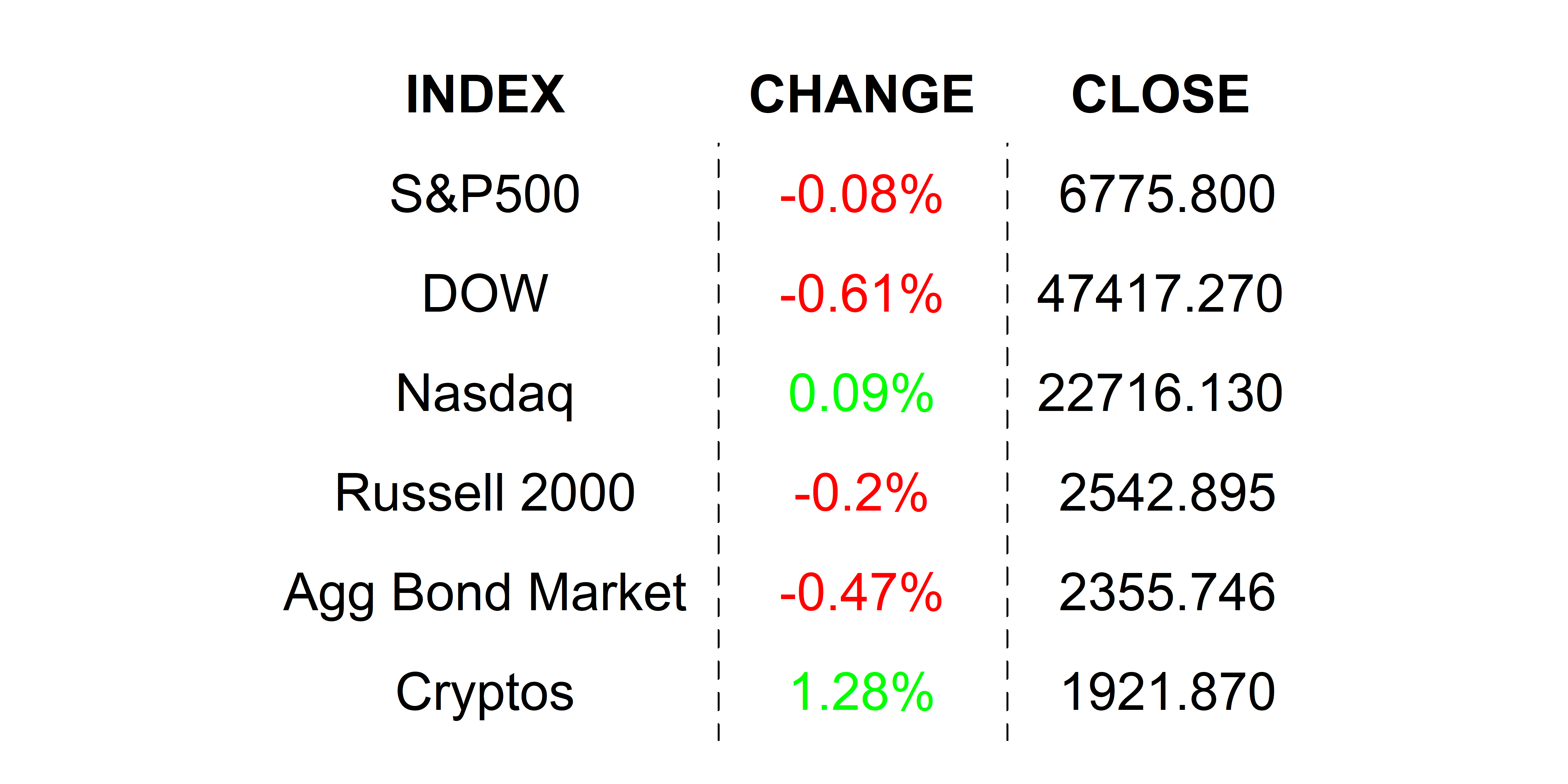
Stocks had another wild roundtrip session yesterday driven by positive earnings and conflicting information about crude oil and the war in Iran. Consumer price inflation came in as expected and benign, not reflecting recent hikes in gasoline prices. Stay tuned–they’re coming. Bond yields are sharply higher than they were just a few short weeks ago as investors factor in higher inflation expectations.
NEXT UP
-
Initial Jobless Claims (March 7th) came in at 213,000, slightly lower than last week’s 214k claims.
-
Housing Starts (January) climbed by 7.2% after advancing by 4.8% in December.
-
Building Permits (January) skipped by -5.4% after climbing by 4.8% in the prior period.
-
Important earnings: Dollar General, Dick’s Sporting Goods, Rubrik, Ulta Beauty, Lennar, Adobe, and Sentinal One.

 service@siebert.com
 Siebert Financial (800)872-0444