
.png)
From Tokyo to New York, one semiconductor selloff demonstrated how connected the global economy really is.
KEY TAKEAWAYS
-
Globalization remains very much alive despite political efforts to reduce dependence on foreign supply chains. Financial markets continue to transmit shocks instantly across borders because technology ecosystems remain deeply interconnected.
-
Japan, Taiwan, and South Korea experienced significant semiconductor-related selloffs that reflected changing investor sentiment rather than deteriorating company fundamentals. The repricing is centered on AI capital spending assumptions rather than operational weakness.
-
Investors are increasingly scrutinizing whether enormous AI infrastructure investments will generate sufficient returns within acceptable timeframes. Higher capital costs are forcing markets to revisit assumptions that previously went largely unquestioned.
-
China's release of the Kimi K3 open-weight AI model demonstrates that AI innovation continues accelerating globally, regardless of market volatility. Competitive dynamics are evolving faster than geopolitical efforts to contain them.
-
Technology revolutions historically experience periods where valuations reset before long-term winners emerge. Market corrections often separate companies with durable competitive advantages from those benefiting primarily from investor enthusiasm.
MY HOT TAKES
-
The current semiconductor volatility represents a normal stage in the maturation of the AI investment cycle rather than evidence that the AI thesis is broken. Financial markets are simply demanding greater discipline around capital allocation. 👈 This one’s important. 👀
-
Globalization has evolved instead of disappearing. Supply chains may be changing shape, but critical technologies remain fundamentally international.
-
AI competition is becoming increasingly global and open-source development is compressing competitive advantages more quickly than many investors appreciate. Innovation is no longer confined to one geography.
-
Investors should distinguish between technological progress and equity market performance. Revolutionary technologies frequently create tremendous economic value while early investors endure significant valuation volatility.
-
Structural winners typically emerge during periods of uncertainty rather than periods of euphoria. Corrections often provide the environment where sustainable competitive advantages become easier to identify.
-
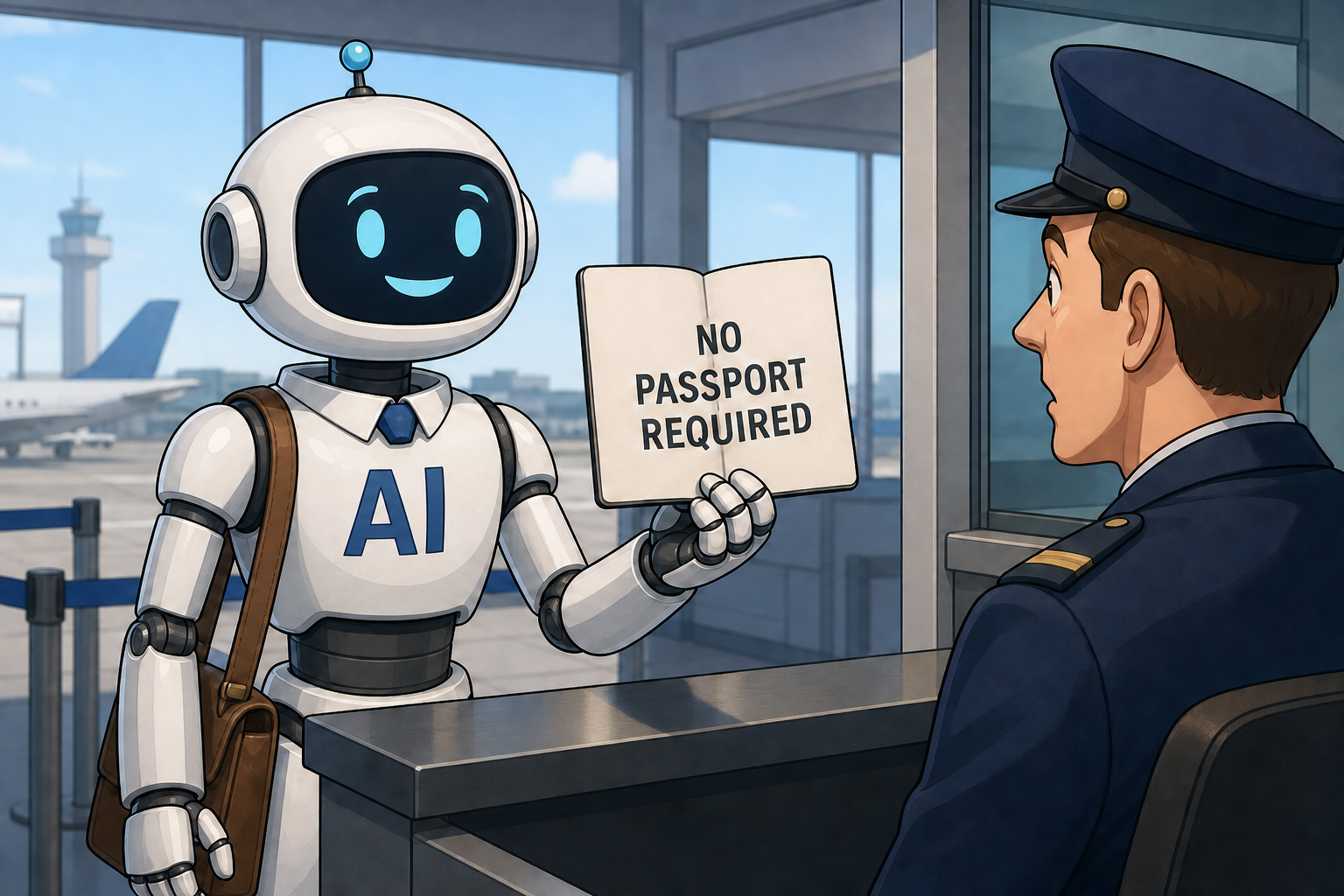
You can quote me: "Money, chips, and code don't carry passports."
Quarantined. Throughout my career I have witnessed many ebbs and flows in globalization. You've heard it a hundred times over the years–globalization is dead, globalization is back, globalization is dead again. I've watched that pendulum swing my entire career. There was the era when "the world is flat" was gospel and every CEO wanted a supply chain that touched six continents. Then came the backlash–tariffs, reshoring, "friend-shoring," decoupling, the whole nationalist encore. Right now, we're sitting about as low on that pendulum as I've ever seen it. Every government on earth–not just Washington (to be fair)–is trying to wall its economy off from the next guy's problems.
Here's the reality: it isn't working. Not even close. Because no matter how many speeches get written about self-reliance, money, chips, and code don't carry passports. And this week proved it in living color–Seoul on Monday, Tokyo and Taipei to close it out.
Overnight, the Nikkei 225 didn't just dip, it fell 4.03%, its steepest one-day drop since June. Kioxia, the memory-chip maker you’ve probably never heard of–one that's been on an absolute tear off last year's lows, got cut down by some 16%. Tokyo Electron and Advantest–two of the picks-and-shovels names (both are in semiconductor manufacturing equipment space) behind every AI buildout on the planet–got dragged into the same current. Here's why those two names matter more than their size suggests: they don't just sell to Japan. Their equipment goes into chip fabs in Taiwan, Korea, the US, and increasingly China. When their stocks move like this, you're not watching a Japanese story. You're watching a read on global AI capex sentiment, priced in yen.
None of this happened because these companies suddenly forgot how to make chips. It happened because somewhere between the earnings call and the trading floor, a lot of very smart people finally sat down with a calculator. 🫣
For two years, the story was simple: spend billions on data centers, GPUs, and power contracts, and the AI revenue eventually shows up to cover the bill. That story still might be true. But "eventually" is doing a lot of heavy lifting (and I have said this before) when your cost of capital isn't going anywhere soon. Wall Street ran the actual numbers on all that CAPEX–the depreciation schedules, the power bills, the chip orders that assume infinite demand–and doesn’t appear to love what it found. Add leverage into that mix, and you get exactly what we saw: a fast, ugly, indiscriminate flush, where good companies and shaky ones get sold in the same basket because somebody, somewhere, has a margin call to answer. That's not a crash. That's a recalibration, and it's happening in public, in real time, with real money.
There's a myth that's been floating around trading desks for two years now: that AI capex is different from every tech buildout that came before it, that this time the demand is so certain the math doesn't need to be checked. The reality is every buildout in history has run into this exact wall eventually–railroads, fiber optic cable, cloud data centers (I have personally lived through 2 of them and watched the other on HBO🤣). The technology usually turns out fine in the long run. The first wave of investors who overpaid to build it almost never do. That's not pessimism. That's just how the bill always gets split.
Taiwan got it worse. The TAIEX fell 6.47%–the single largest one-day loss since April of 2025. TSMC, the company that quite literally builds the chips every AI company on earth depends on, dropped 7.3%. Here's the part that should stop you cold: TSMC's second-quarter earnings were good. Strong, even, but it didn't matter. When a market decides valuations got ahead of reality, good earnings don't save you–they just tell you the correction is about sentiment, not substance. This wasn't one bad headline about one company. It was a market-wide repricing of what "AI winner" is actually worth, and it happened in a single session.
And that's the whole point of today's blogpost/newsletter. A selloff that started with Japanese chip equipment makers and a Taiwanese foundry landed on portfolios in New York, London, and everywhere else within hours. Nobody voted for that. Nobody signed a treaty agreeing to it. It just happened, because Tokyo and Taipei sit at the center of a supply chain the entire world quietly depends on, whether the world wants to admit it or not. You can onshore a factory. You can't onshore physics, and right now the physics of building enough compute to run the AI boom runs straight through a handful of Asian companies.
If you want proof this wasn't a one-day accident, look two weeks upstream. South Korea's Kospi already gave everyone the preview. Samsung and SK Hynix–the two companies that make a massive share of the world's memory chips, the stuff that goes into literally every AI server on the planet–got hit hard enough to trip a sell-side “sidecar” and force a five-minute trading halt. That was chip selloff number one. This week in Tokyo and Taipei was chip selloff number two–same movie, bigger theater, same underlying question: is the AI capex bill bigger than the AI revenue check?
Korean financial press has reported that the exchange has already logged somewhere around 30 of these circuit-breaker moments this year. For context, the entire 2008 financial crisis only produced 26. Sit with that for a second before you decide this is just noise. Whatever you want to call this stretch of the market, "calm" is not likely to be the word.
Zoom out and the pattern is obvious. This isn't Japan's problem, or Taiwan's problem, or Korea's problem. It's the same trade unwinding in three currencies, three time zones, three regulatory regimes–because underneath the flags, it's one supply chain and one bet on AI demand. If your portfolio has any exposure to tech, you already own a piece of this story, whether you meant to or not.
Here's where it gets almost poetic. While half of Asia's tech investors were dumping chip stocks over fears that AI spending won't pay off fast enough, a Chinese AI lab spent this same morning proving the AI race isn't slowing down at all–it's just changing hands.
Moonshot AI released Kimi K3 WHILE YOU SLEPT. The tech specifications read like this: Kimi K3 is a 2.8 trillion parameter model with a million-token context window, and it's open-weight, meaning anyone, anywhere, can download it and build on top of it for free. Early comparisons put it right in the conversation with the best closed models coming out of the US. Whatever gap existed between American and Chinese frontier AI just got a lot smaller, and it happened on the exact morning Wall Street was busy convincing itself AI economics don't add up.
Think about what that actually means. Every dollar of that Tokyo-Taipei capex panic assumes AI stays scarce enough, and proprietary enough, that somebody can charge a premium for it. Every time a lab anywhere in the world–doesn't matter which flag it flies–ships a frontier-grade model for free, that assumption takes another hit. That's not a US story or a China story. That's a "the technology doesn't care whose passport you carry" story, playing out in real time on two sides of the planet in the same 24 hours.
So pick your contradiction. Investors in Tokyo and Taipei spent the day pricing in doubt about whether AI capex will ever pay off. Meanwhile, a lab on the other side of the world just handed the entire planet a frontier-grade model for the price of a download. You can try to build a wall around your economy, your supply chain, your AI ecosystem. Somebody on the other side of that wall is still going to ship the thing that changes the math–and you'll feel it in your portfolio by morning whether you were prepared for it or not.
That's the real story underneath the ticker symbols. Japan, Taiwan, Korea, China, the US–every one of them is tangled up in the same handful of supply chains, the same handful of technologies, the same handful of outcomes. The pendulum keeps swinging toward isolation in the headlines and keeps landing on interdependence in the data. Nobody's rebuilding a self-contained economy inside their own borders, no matter what the campaign speeches say. What's actually being built is faster, cheaper, and more interconnected than the version we had five years ago–just with more turbulence along the way.
Today's training session in Asia was a rough one for chip investors. As I write this note, futures are pointing to a lower open–not surprisingly with Nasdaq deepest in the red. This is a pretty stark reminder that the smartest people in every one of these markets are still building, still shipping, still racing to solve the same problem from different directions, on a timeline that doesn't wait for anyone's comfort level. That kind of race doesn't stop when a stock price drops 5% in a morning. History says days like today are usually when it actually picks up speed–and when the companies with real staying power start separating themselves from the ones that were just along for the ride.
My friends, I've been on Wall Street through enough of these stretches to know how they get remembered a few years out. Nobody looks back at the sharp corrections and calls them the end of the story. They call them the point where the real builders got separated from the noise, and where the next leg of the run actually got its footing. I won’t make you read between the lines on that. All of this volatility we have seen in tech and semiconductors recently is part of the evolution process of AI. It is at these inflection points that the long-run winners emerge–and the smartest investors earn their stripes.
YESTERDAY’S MARKETS
Stocks closed mixed yesterday. The Dow rose 0.28% to 52,806, the S&P 500 fell 0.16%, and the Nasdaq dropped 0.82%, as chip stocks declined for a second straight session. Brent crude slipped 42 cents to $84.53 a barrel and U.S. crude fell 22 cents to $79.38 amid escalating U.S.-Iran tensions
NEXT UP
-
Housing starts (June) may have slipped by -0.7% after gaining by 1.9% in May.
-
Building Permits (June) will probably edge higher by 0.1% after slipping by -0.9% in the prior period.
-
Industrial Production (June) is expected to grow by 0.2%, a slight improvement over the prior month’s 0.1% growth
-
University of Michigan Sentiment (July) may have improved to 51.0 from 49.5.
-
Next week: earnings take center stage in a light data cycle. The first of the Mag-7 stocks hit the tape and will set the stage for the market-moving, mega caps that are lining up. Make sure you drop in often, so you don’t miss a beat!


 service@siebert.com
 Siebert Financial (800)872-0444