
.png)
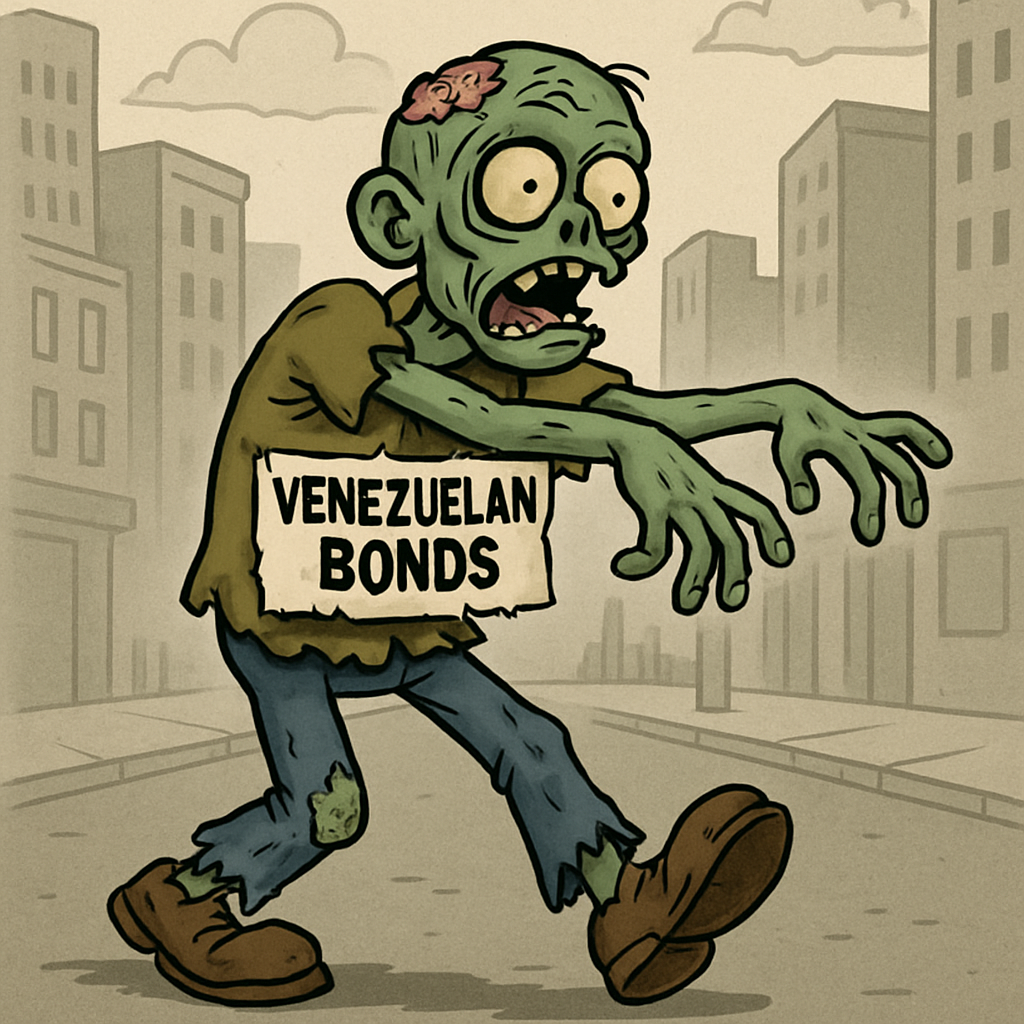
From 16 cents to 40–why Venezuelan bonds are moving and what comes next.
KEY TAKEWAYS
-
Zombie bonds are speculative wagers not income investments
-
Venezuelan debt rallied on political change not financial repair
-
Rebuilding Venezuela requires massive new capital
-
Bondholders face major haircuts in any restructuring
-
Time and legal risk destroy headline returns
MY HOT TAKES
-
Markets are pricing hope not solvency
-
Regime change doesn’t fix balance sheets
-
IMF involvement always subordinates existing creditors
-
Fast price moves attract the least prepared investors
-
Distressed debt rewards patience and punishes excitement
-
You can quote me: “If you’re buying Venezuelan debt you’re betting on politics, oil, and time–all at once.”
Three days later. Three days later. You know the scene. The streets are empty. Stray dogs root through rubble piles in search of food. Vultures are circling above. Smoke billows in the distance. The dogs’ innate sense of danger causes them to wheel about and growl at something behind the camera (the viewers back 😉). We don’t know what it is, but we have a growing sense that it may not be good. We have two choices: run in the opposite direction or turn and face it. If we turn it may turn out to be a windfall. Perhaps another survivor. There may be upside. But then again, it may be death itself paying you a visit. You are a risk taker, so you turn around, and what you see is neither death nor upside. No. It’s something in between–a zombie! You are startled, but you are unsure. Is this a harmless, silly, slow zombie, or is it one of those fast-moving, brain-eating zombies. It’s your final chance to run for cover–it’s spotted you and heading your way. You may never know.
Have you ever heard of a Zombie Bond? A Zombie Bond is a debt security issued by a sovereign or corporation that has defaulted or is unable to service its obligations yet continues to trade in secondary markets. These bonds often remain outstanding for years without payments while investors speculate on recovery, restructuring, or political change. Pricing reflects expected recovery value rather than contractual yield or maturity. In other words, they are purely speculative–you buy them as a wager and not for their fixed income characteristics. Some close-to-home examples of Zombie Bonds were Detroit GO Munis or Puerto Rico GOs and COFINA bonds. They have also popped up in Argentina and Peru. Wouldn’t you know it, there are a bunch of them prowling the markets in Venezuela! 🧟
As the Santa Rally draws to a close and Santa prepares to visit family in Florida before heading back to the North Pole, we have one or two days to get ready for a raft of super-important economic data. This weekend’s military action and arrest of Nicolás Maduro has kept me busy making videos, responding to press inquiries, and writing since… well, very early Saturday morning (yes, I still wake up at 3:30 AM on Saturday). The bulk of all those have been focused on the energy sector–specifically stocks that will benefit from Maduro’s ouster. Of course, I skirted risk-proxy commodities like gold and silver, and I would have been remiss if I didn’t pay a slight homage to Bitcoin, which is for now the best 24-7 gauge of speculation and risk. As the event happened in the 24-2 hours of the weekend, it was the only real gauge of market reaction. Yes, there was Kalshi and Pollymarket too. For the most part however, it has been all about crude oil and energy sector stocks. This morning, I want to cover a possibly boring but highly-import topic while I still have your attention on Venezuela. Venezuelan bonds. Strap in and take a few gulps of your strong coffee. You NEED TO KNOW THIS to be ahead of everyone else–investor Zombies who only listen to the mainstream headlines. 🤣
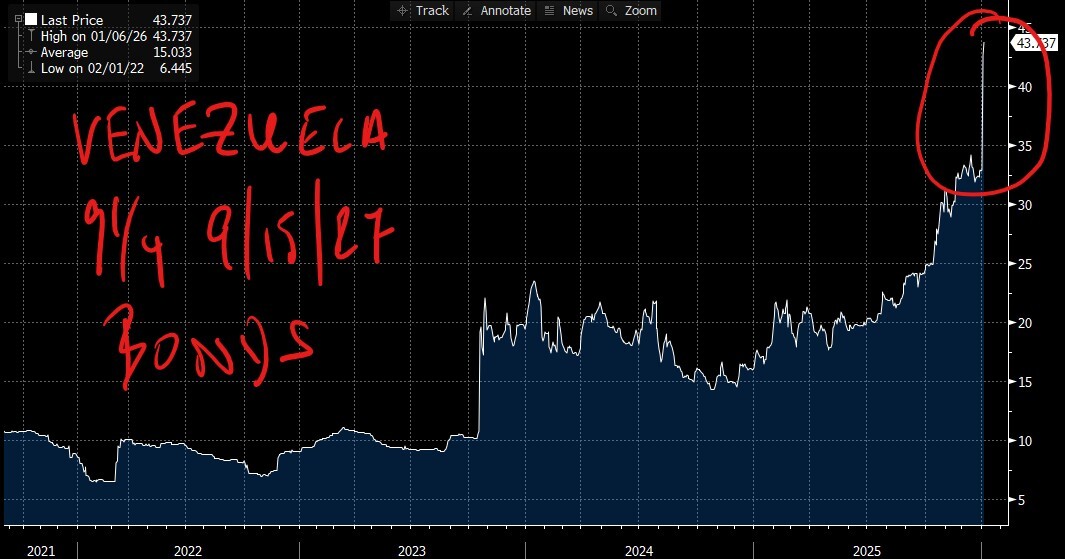
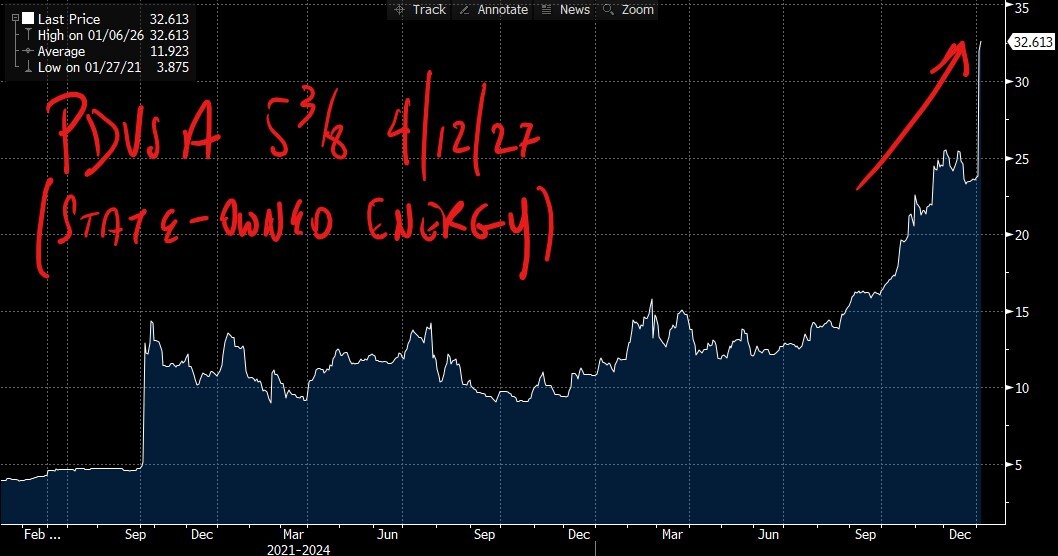
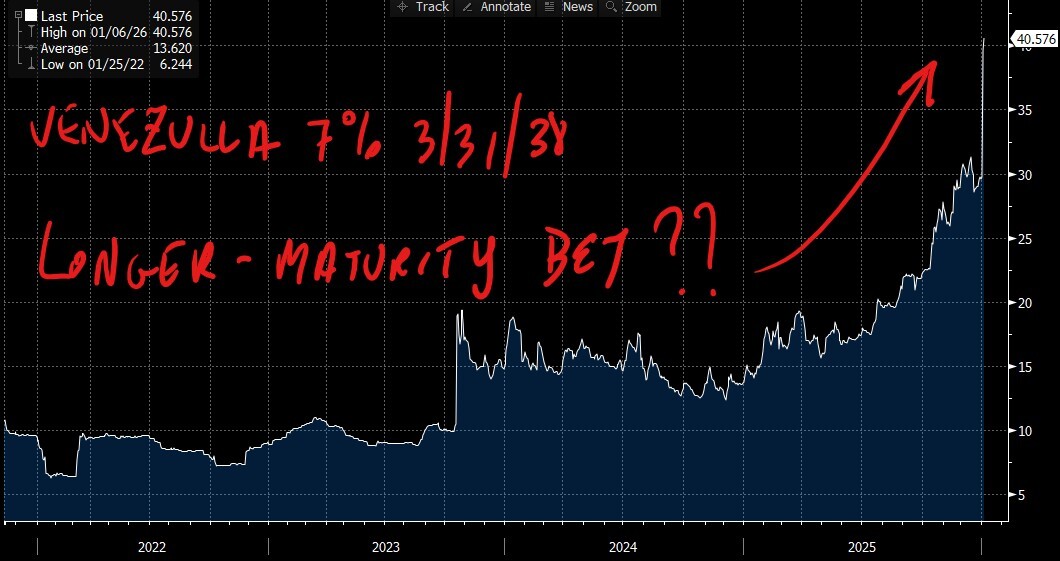
The reality of the Venezuelan debt situation is frankly staggering and it is the kind of mess that makes a run-of-the-mill bankruptcy look like a walk in the park. We are looking at a country that has been effectively locked out of the global financial system since 2017 when the defaults first began to pile up like uncollected trash. Right now, the total bill for Venezuela’s return to the civilized world sits somewhere between $150 billion and $175 billion. That is not a typo! It is a mountain of obligations that includes roughly $60 bb in defaulted sovereign and PDVSA principal plus a dizzying collection of accrued interest and legal claims from companies like ConocoPhillips who have been waiting at the door for years to get their pound of flesh. When I look at my Bloomberg terminal this morning I see these zombie bonds twitching with a frantic new energy because the market is suddenly pricing in the end of the Maduro era. These bonds were trading in the basement at sixteen cents on the dollar not that long ago but the weekend’s events have sent them screaming toward the forty-cent mark as speculators bet that a new government will finally sit down at the negotiating table.
Now, we have to ask if the ousting of Maduro actually changes the math or if it just changes the faces in the room. The short answer is that the potential for change is massive, but the cost–THE COST–is even bigger. You cannot simply flip a switch and turn a failed state back into a petro-powerhouse overnight. To get the oil flowing at levels that could actually service this debt Venezuela needs a massive infusion of capital. I have seen unconfirmed estimates at $80 - $100 billion just for infrastructure repair. The refineries are rusted, the fields are depleted and the skilled labor has fled the country. So who pays the bill? The answer is twofold and it is a bitter pill for the current bondholders. First, the IMF and the World Bank will have to step in with a historic rescue package which always comes with strings attached that prioritize staying alive overpaying back old creditors (can you remember the Greek sovereign debt crisis in 2012). Second, the bondholders themselves are going to take a haircut that would make a drill sergeant blush (that means: BIG, in my Dad-humor language). We are likely looking at a principal reduction of 50+% because there is simply no version of the future where a rebuilding Venezuela can carry two hundred percent debt-to-GDP.
This brings us to the big risks, because investing in these zombies is not for the faint of heart–or the light of wallet. You have to understand that political instability doesn't vanish just because the guy at the top is in handcuffs in a Brooklyn jail cell. The Chavista infrastructure is deep, and the country is still crawling with various armed groups and guerrilla factions like the ELN who might not be too happy about a US managed “transition.” There is also the massive legal minefield of existing US sanctions. While the Treasury Department might start to loosen the grip, it remains a very complicated process to trade these assets without running afoul of OFAC (Office of Foreign Assets Control) regulations. Furthermore, the time value of money is the silent killer here. If you buy a bond at 40 (essentially forty cents on the dollar) expecting a recovery but the restructuring takes five or six years of legal wrangling and political infighting, your actual annualized return starts to look a lot less like a windfall and a lot more like a mistake. It’s just math, stupid. You are also betting on the price of crude oil remaining high enough to fund the entire reconstruction which is a massive macro wager on top of a specific political one.
For the average investor looking to take a bite (🤣) out of this zombie recovery, the path is narrow and full of traps. You generally cannot just log into your E-Trade account and buy a Venezuelan sovereign bond, because they are restricted to institutional or "qualified" buyers due to the default status and the sanctions. However, you can look at the professional managers who have been lurking in these shadows for years. Firms like Ashmore Group have built their entire reputation on being the biggest baddest players in distressed emerging market debt and they often carry significant exposure to Venezuela in their sovereign debt funds. You can also look at broad ETFs like the JP Morgan EMBI which recently began re-weighting Venezuela into the index. This means that if you own a broad emerging market bond fund you might already have a tiny sliver of this zombie trade working for you. It is the safer way to play the game because you are getting the upside of the regime change without the risk of a total wipeout if one specific bond gets tied up in a decade of litigation over Citgo assets.
Back on street level, you stare at this zombie. Is this a harmless slow-moving opportunity or a fast-moving brain-eater? For most people it is the latter. The temptation to chase a 40% move in a few days is powerful but knowledge truly is power in this corner of the market. You have to realize that you are not buying an investment, you are buying a seat at a very long and very loud poker game where the house always takes its cut first. If you must play these waters, do it with eyes wide open and only with money you are prepared to see vanish into the smoke over Caracas. These Zombie Bonds have come back to life for now but they still don't have a heartbeat. Be careful out there because the only thing worse than being a zombie is being the one the zombies are chasing. Stay sharp, keep your coffee strong, and remember that in the world of distressed debt the first one out is usually the only one who survives with their shirt on their back. Remember, with zombies, you don’t have to run fast, you just have to run faster than everyone else around you.
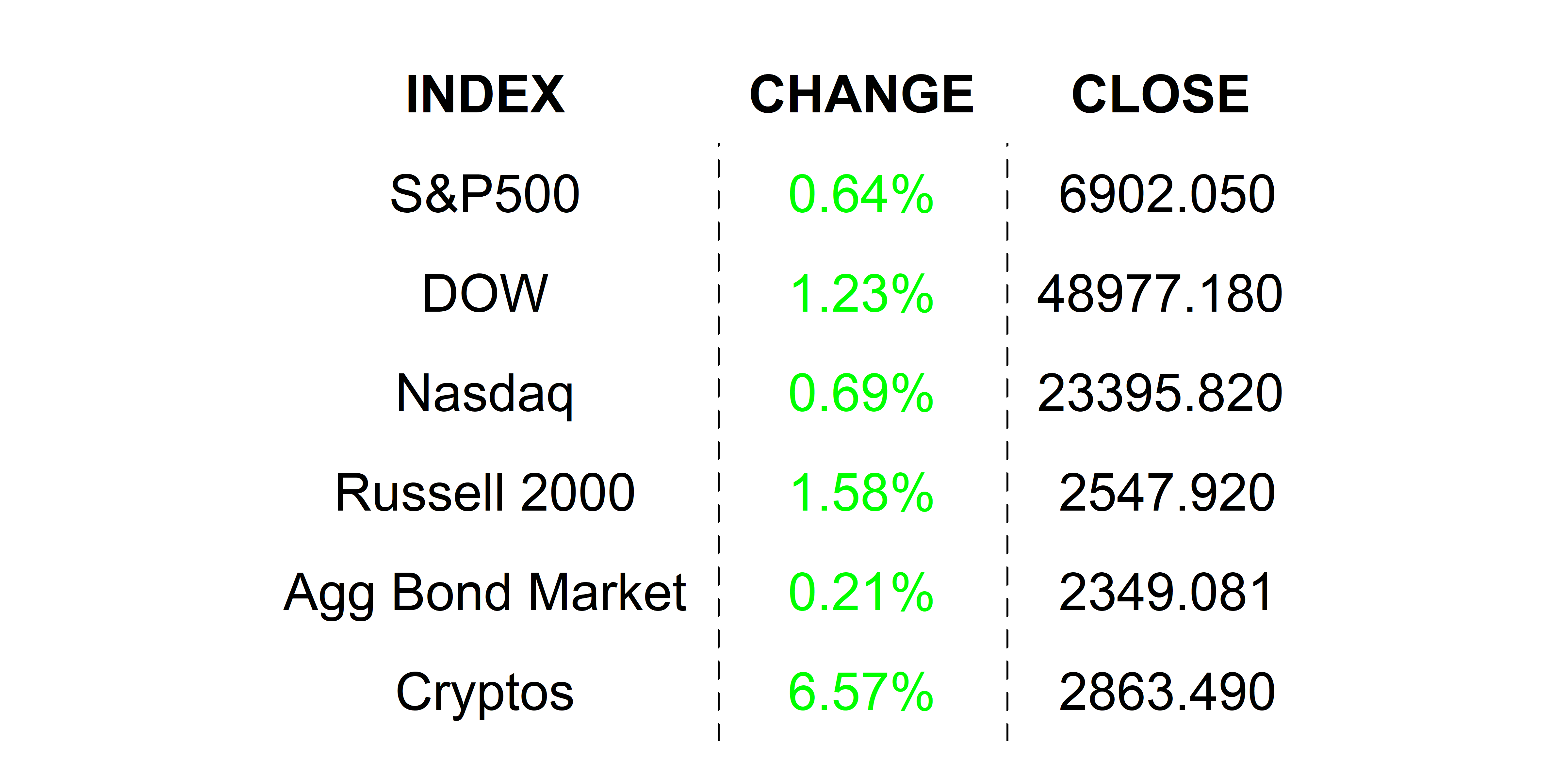
YESTERDAY’S MARKETS
Stocks rallied yesterday as investors priced in a flawless execution for the “turnaround” in Venezuela. Dip buyers are positioning for 2026 ahead of big numbers due out later this week.
NEXT UP
-
S&P Global Services PMI (December) is expected to come in at 52.9, in line with prior estimates.
-
Fed speakers today: Barkin and Miran.


 service@siebert.com
 Siebert Financial (800)872-0444