
.png)
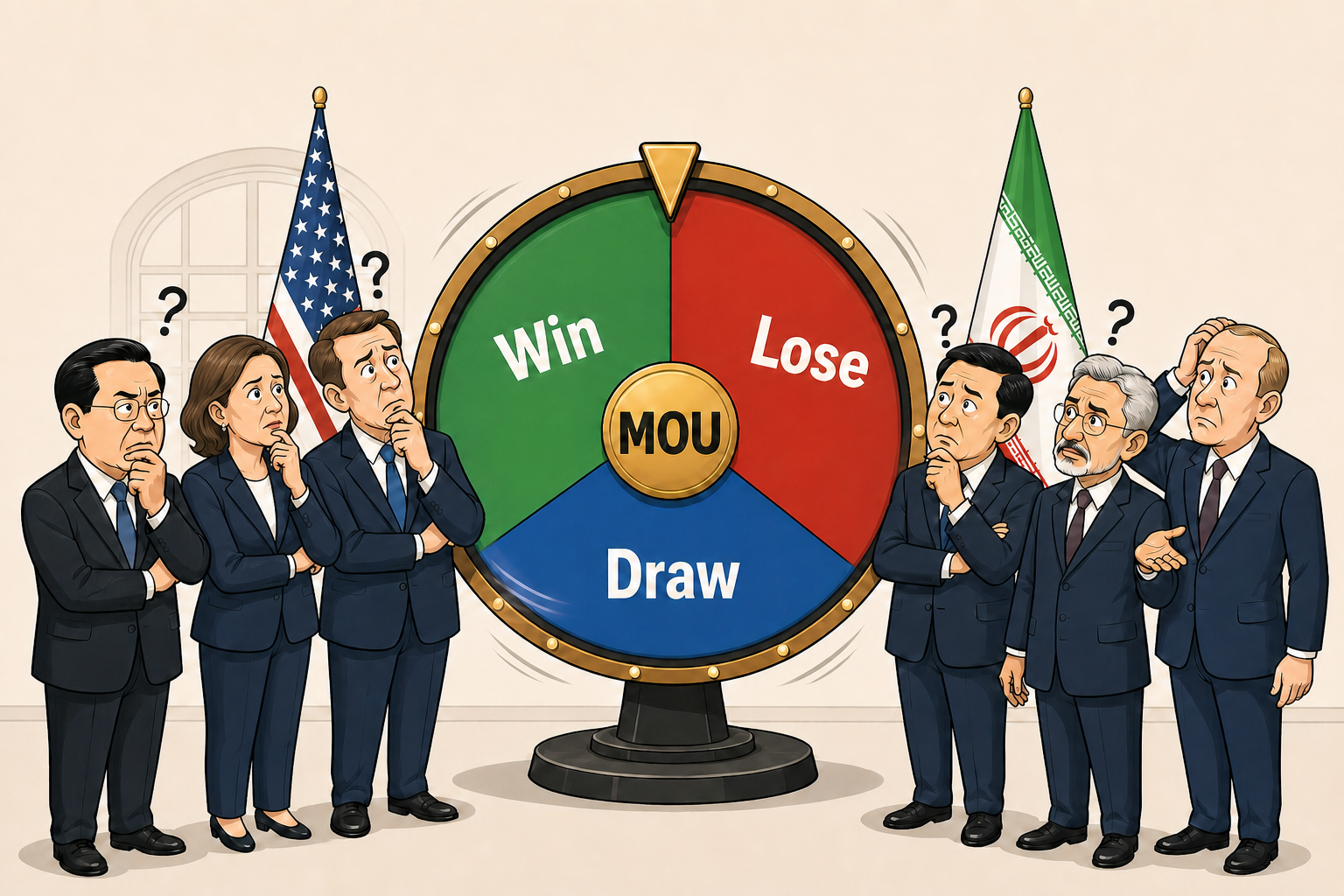
The market is pricing cautious optimism on Iran. Here's what happens if negotiations succeed–or fail.
KEY TAKEAWAYS
-
Negotiations between the United States and Iran have entered a formal 60-day process following the June 17 memorandum of understanding. Four working groups have been established to address sanctions, nuclear issues, reconstruction, and implementation.
-
Traffic through the Strait of Hormuz has improved from crisis levels but remains far below historical norms. Energy markets are currently pricing a partial normalization rather than a complete return to pre-war conditions.
-
A successful reopening of Hormuz could drive oil prices materially lower and eventually reduce gasoline prices for consumers. The economic benefits would extend beyond fuel into transportation, food, and other energy-sensitive costs.
-
Energy inflation played a significant role in recent inflation pressures. A sustained decline in crude oil prices could meaningfully improve headline inflation measures even if core inflation remains sticky.
-
Three distinct paths remain possible: a successful comprehensive agreement, a partial and imperfect resolution, or a breakdown in negotiations that reignites energy market stress.
MY HOT TAKES
-
Markets are currently assigning too much confidence to a favorable outcome without fully discounting the risks associated with unresolved nuclear issues and inspection disputes.
-
The most likely outcome is neither a breakthrough nor a collapse but a prolonged period of managed uncertainty that keeps a modest risk premium embedded in energy prices.
-
Energy markets remain the most important transmission mechanism between geopolitics and household finances. Changes in oil prices ultimately show up in consumer behavior, inflation data, and monetary policy.
-
Investors should focus less on daily diplomatic headlines and more on measurable indicators such as shipping traffic, inspection activity, and actual energy flows.
-
The biggest investment risk may not be what happens if negotiations fail, but rather how dramatically expectations could shift if a full normalization unexpectedly succeeds.
-
You can quote me: "On Wall Street, the distance between a foundation and a finished house is where all the risk lives."
Immaculate perception. I rolled over this morning at 3-something AM, as I always do. I reached for my specs and knocked them on the floor–as I always do. I grabbed my phone and looked at the news headlines. The front of my phone, my inbox, and my newsfeeds were full of SpaceX. While I would very much like to write about it this morning to add to what I have already written and recorded–perhaps add something about retail margin calls–I feel as if I have said enough, and so has pretty much everyone else. I kept scrolling and finally came to a notification from VP JD Vance–something about building a house. I wanted to know more, so I clicked for the full quote, and there he was standing at some Swiss Resort in front of Lake Lucerne. Here is the quote that got my attention.
"The final deal is the house. We set the foundation. We haven't built the house, but we've laid a successful foundation to get to a good place for the American people."
I zeroed in on the "successful foundation" clip. This is what I was after. For days, I had been complaining that my newsfeed was too jam packed with report after report about the Iran MOU, and each one said pretty much the same thing, which was essentially…er, nothing. I got my wish with SpaceX retaking the newsfeed and crowding out Hormuz, but now I feel as if we need some more Hormuz–it really is the lynchpin for everything at the moment–though SpaceX can do a number on all growth stocks if it continues to slide. That said, I have been deeply thinking about what-ifs around a successful negotiation with Iran and actual re-opening of the Strait. I am going to go with the Vice President's optimism for a moment and see where it takes us.
Before we build the house, let's look at the lot. The MOU was signed June 17th–that is Day One of a 60-day clock. The hard deadline for a final deal is August 16th. What happened at Bürgenstock over the weekend was the first high-level session under that framework, and by all accounts it was a genuine 18-hour grind. Four working groups have now been formally established: Sanctions Termination, Nuclear Affairs, Reconstruction and Economic Development, and Monitoring and Implementation. Technical talks are continuing in Switzerland as you read this. That is the architecture Vance was describing when he used the house metaphor. Foundation poured. Framing, not yet started.
Here is the physical reality on the ground…or rather, on the water. Before the war started on February 28th, roughly 100 to 135 ships transited the Strait of Hormuz every single day. That waterway carries approximately 20% of the world's seaborne oil and nearly as much of its liquefied natural gas. When Iran effectively shut it down after the initial strikes, traffic collapsed to an average of six ships per day between March and late May. Between June 19th and 21st– right around the time the Swiss talks were getting underway–MarineTraffic recorded 71 confirmed transits over three days, including a peak of 35 in a single day on June 20th. Progress, yes. But we are still nowhere near normal. The average American, who fills up their tank every Tuesday morning on the way to work, has been paying for every one of those missing ships at the pump. The national average hit $4.55 a gallon in May. As of this morning it sits at $3.93. Before the war it was $2.96.
Oil tells the same story from the other direction. WTI crude is trading around $74 a barrel this morning. At the peak of the crisis it was north of $95. Goldman Sachs, which revised its Brent forecast after the MOU was signed, now sees $80 for the fourth quarter of 2026 and $75 as the 2027 average, and that assumes an orderly, partial normalization of Hormuz flows. A full reopening could push numbers well below those targets. The market is essentially pricing in something between half-open and fully-open. What it is not pricing in is another closure, and–as I have been warning since hints of a deal started circulating–that asymmetry matters.
So let's do what Wall Street actually does when it is feeling optimistic. Let's run the best case. Not the fantasy case. The realistic best case, where things go right on roughly the timeline the VP is suggesting.
In the next two weeks–call it by July 7th–the Lebanon de-escalation holds. No major Israeli strikes, no Hezbollah rockets that trigger an Iranian walkout. The four working groups hold their first substantive sessions. IAEA inspectors, whom Vance says Iran agreed to readmit, actually get boots on the ground in Iran this week as promised. Mine-clearance operations–and please don’t forget that Iran is believed to have mined sections of the strait–begin in earnest under the coordination mechanism established at Bürgenstock. Insurance underwriters start watching. They need to see verified safe transit before war-risk premiums normalize, and right now those premiums are running some eight times their pre-crisis level.
By weeks four through six, roughly July 21st through August 4th, Hormuz traffic has climbed toward 60 to 70 ships per day. The tanker backlog that has been sitting at anchor outside the Strait, sometimes for weeks, begins to clear. Kuwait has already lifted its force majeure notices (I also saw that in my newsfeed this morning 🤓). Abu Dhabi's ADNOC has resumed supply operations. Saudi Aramco pipeline capacity, which had been diverted and constrained, starts moving at closer to normal rates. The 60-day US Treasury waiver on Iranian oil sales, which was issued Monday and runs through August 21st, provides the legal runway for Iranian barrels to start flowing back into the market.
By week eight, roughly August 16th, the hard deadline: a final deal is signed. The Strait is formally declared fully open. Traffic approaches 80 to 100 ships per day. WTI tests $60 to $65. Brent pushes toward $65 to $70. And now the clock starts ticking on what you actually feel in your wallet, because the relationship between crude prices and your gas pump is not instant. It is a lag. Crude moves first, wholesale gasoline moves about two weeks later, and retail prices follow four to six weeks after that. Which means if oil hits $62 in mid-August, the Millers (my fictional every-day American family) see it at the pump somewhere around late September or early October.
At that point, gas is likely trading back toward $2.80 to $3.00 a gallon. That is roughly a dollar less than today. For a family driving 1,000 miles a month in a car getting 25 miles per gallon, that is about $40 a month back in their pocket. Over six months, that is $240. Not life-changing, but real. And that is just the direct fuel cost. Energy is embedded in almost everything--grocery delivery, airline tickets, heating oil, the fertilizer that goes into the food supply. The downstream relief compounds.
Now let's talk about what the Fed is watching, because this is where it gets interesting. PCE inflation–the Fed's preferred measure–was running at 2.8% year-over-year in February before the conflict started and oil prices spiked. Core PCE, which strips out food and energy, was 3.0%. CPI was at 2.4%. Those numbers got worse in March, worse again in April, and the energy component drove nearly all of it.
The reversal works the same way on the downside. Energy carries roughly a 7% to 8% weight in the CPI basket and about 6% in the PCE. A sustained $30 to $35 per barrel decline in crude from crisis highs, which this best case gives us, would knock approximately 0.8 to 1.2 percentage points off headline CPI on a trailing 12-month basis by the first quarter of 2027. The PCE relief is slightly smaller in magnitude, closer to 0.6 to 1.0 percentage points, reflecting its lower energy weight. Neither number is trivial. That is the difference between headline CPI printing at 3.5% and printing at 2.5%. Kevin Warsh, who is not in the business of cutting rates as an act of charity, would notice.
The important caveat, and I am going to say this clearly: core inflation does not move much on oil alone. The structural stuff like services, shelter, tariff pass-through, and wages do not go away because the Strait of Hormuz reopened. Warsh is still dealing with all of that. But the energy tail wind buys him breathing room, and breathing room in a hawkish Fed regime is worth something.
Which brings me to the three scenarios you actually need to think about, because the best case is definitely not the only case.
Scenario one is what I have just described–call it the Trump Deal scenario, probability somewhere in the 20% to 25% percent (we would say P = 0.2 to 0.25 in stats 😉). Everything that needed to go right goes right on schedule. Lebanon holds. IAEA inspectors actually do their job. The nuclear question gets resolved or at least kicked far enough down the road that both sides can live with it. Final deal by August 16th. Hormuz fully normalized by September. WTI in the low $60s. Headline CPI approaching 2.5% by early 2027. Warsh signals a potential rate cut path for mid-2027. Equity markets, which have been pricing in uncertainty for months, reprice on the dual tailwind of lower energy costs and a rate pivot in the distance. For investors, this is the scenario where you wish you had been longer energy consumers and shorter energy producers heading into Q3.
Scenario two–the one I actually think is most likely, at roughly 50% to 55% probability–is what I call Managed Muddle. The 60-day window produces something, but not everything. Hormuz operates at 60% to 70% of normal capacity by September. The nuclear question remains unresolved, leaving a permanent risk premium in oil prices. WTI settles in the $72 to $78 range. Gas at the pump drifts down to $3.50 to $3.70 by fall, which is meaningful relief for the Millers, but not a return to what they were paying in February. Headline CPI eases to somewhere between 3.0% 3.4% by early next year. Warsh holds rates flat. No cuts in 2026. The Iran story becomes background noise rather than front-page news, which is actually the best outcome for market stability even if it is not the most exciting headline.
Scenario three–the one nobody wants to talk about at a dinner party–is what I have been calling the Swiss Trap, and I assign it roughly 20% to 25% probability. The 60-day clock runs out without a final deal. The nuclear gap does not close– btw Iran's foreign ministry has already denied making any new commitments on inspections, directly contradicting what Vance said the other morning. That is not a good sign. If the Iranians walk away, or if the negotiators can't outrun the news cycle, Hormuz goes back to restricted status. WTI spikes back toward $90 plus. The Millers are back at $4.50 at the pump. Headline CPI re-accelerates toward 4.5% or worse. Warsh is forced to raise rates. The yield curve, which just flattened on ceasefire optimism, blows back out. Recession risk climbs materially. Watch one thing above all others: whether IAEA inspectors actually clear Iranian nuclear facilities this week. Vance said it would happen "at a minimum this week." If it does not, Scenario Three's probability goes up and Scenario One's goes down.
Here is your important takeaway. The market this morning is pricing in something between Scenario One and Scenario Two. Brent at $77, gas near $3.93 and falling. That is not full euphoria, but it is not fear either. It is cautious optimism from people who have watched this movie before and know that the third act is always the hardest. The smart money is not betting on best case. It is hedging for base case and keeping one eye on the nuclear spoiler.
For the Millers, the message is simple. Do not refinance the house because gas might go back to $2.80. But do not ignore the direction of travel either. If this foundation holds and the walls go up on schedule, the inflation picture by the fourth quarter of 2026 looks meaningfully better than it did when you were paying $4.55 to fill the tank in May. That is real money, and it is moving in the right direction.
For investors, energy stocks are currently priced for $75 to $80 oil. A full Hormuz normalization means that sector reprices lower. Fixed income gets interesting again if Warsh gets natural cover from energy deflation to hold rates and signal patience. And if you are sitting in cash wondering when to deploy it–a world where oil is at $65 and headline CPI is at 2.5 percent and the Fed is signaling a 2027 pivot is a very different world from the one we have been living in since February 28th.
Let’s be clear: we have not built the house yet. But the foundation is there–and on Wall Street, the distance between a foundation and a finished house is where all the risk lives. Please observe all construction site safety guidelines.
YESTERDAY’S MARKETS
Yesterday, the S&P 500 closed down 0.37%, while the Nasdaq Composite fell 1.32% as technology stocks weighed on both indexes. The Dow Jones Industrial Average bucked the trend, adding 148 points, or 0.29%, to close at 51,712, led by a nearly 4% gain in Caterpillar. SpaceX extended its losing streak to three straight sessions, falling 16% on the day, while Alphabet dropped 5% and Amazon shed 4.8% on AI spending concerns. WTI crude settled near $74 a barrel and Brent near $78, both down on renewed optimism surrounding the Iran peace talks.
NEXT UP
-
S&P Global Flash Manufacturing PMI (June) may have slipped to 54.6 from 55.1
-
S&P Global Flash Services PMI (June) probably improved to 51.1 from 50.7.
-
Important earnings today–Yes, we still have some–Carnival Corp, FedEx, and Cerebras Systems.

 service@siebert.com
 Siebert Financial (800)872-0444