
.png)
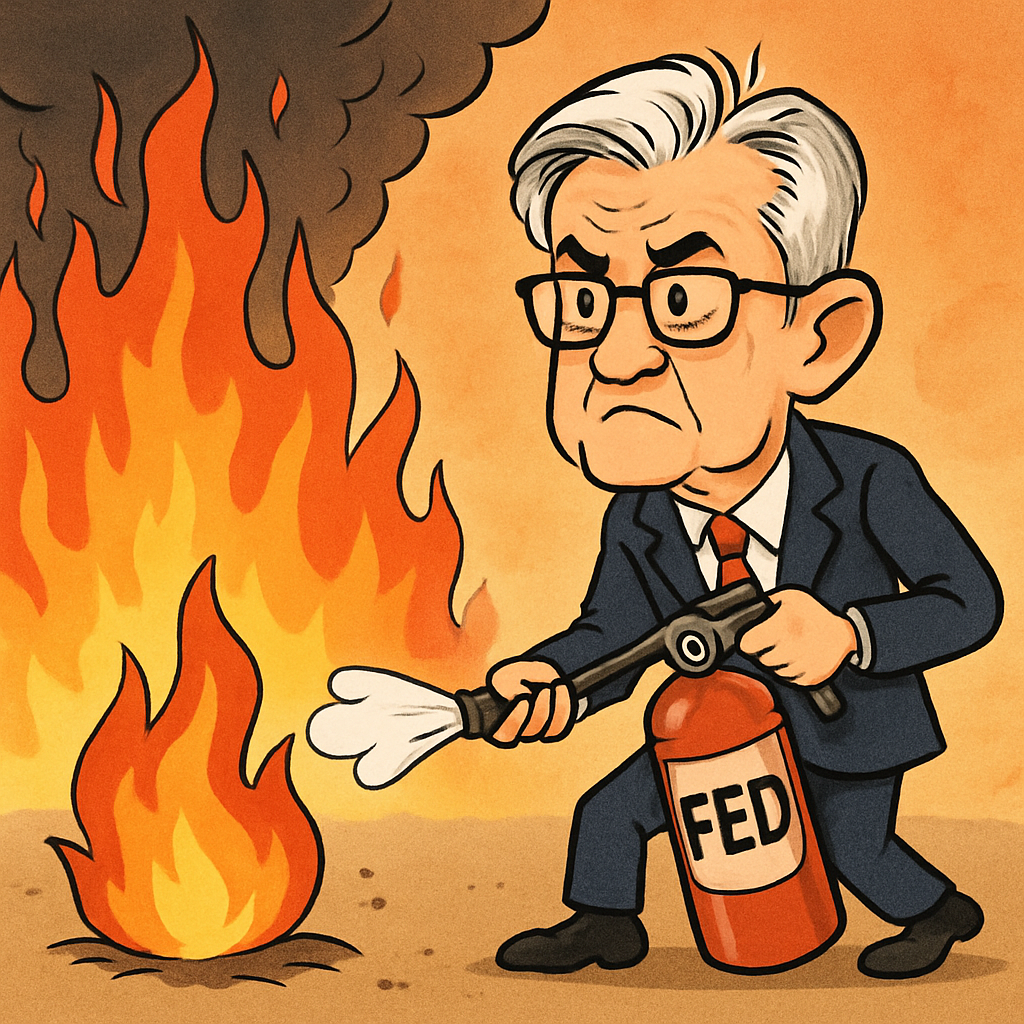
The Fed’s inflation obsession may be fighting yesterday’s battle.
KEY TAKEAWAYS
-
Inflation headlines are dominated by politics and optics, not data
-
Q3 GDP was strong but backward-looking and limited for today’s decisions
-
Consumption remains the backbone of economic growth
-
November inflation data shows no meaningful acceleration
-
Higher rates cannot undo structurally higher prices
MY HOT TAKES
-
Markets are confusing high prices with accelerating inflation
-
The Fed risks overtightening in response to yesterday’s fears
-
Tariffs are being blamed for inflation they didn’t cause
-
Wage growth matters more than restrictive rates for households
-
Policy coordination matters more than posturing
-
You can quote me: “The Fed is at risk of fighting yesterday’s war with today’s economy.”
Inflate debate. It seems that the only inflation being discussed these past few days has been about egos. As we watch world leaders take the stage In Davos and endlessly flex for the cameras and the press. The actual impacts of all that flexing on your day-to-day life and perhaps, even more importantly, your portfolio–zero. In the midst of all that and the massive dip-buying rally of the past two sessions, we got some very important economic numbers about that other type of inflation–price inflation.
Because of the abridged week and all the DC craziness of late 2025, yesterday became THE day for a massive data dump. Before we dig in, it is important to note that most of it was…er, less-than-useful. Let’s get the useless stuff out of the way first.
GDP for Q3 of 2025 was 4.4%. Quite respectable. That annualized number was revised upward from the second estimate (4.3%) and above what bluechip economists were expecting (4.3% median). That was a lot of information in one sentence which was intentionally designed by the author to make you chuckle. Ok, if you don’t get nerd humor, I will tell it to you straight. 🤓 The US economy was doing quite well in the 3 months prior to September 30th of last year. Did you get that bit of humor? Do you even remember what you were doing on September 30th? I have to admit that I just looked back in my planner to remember. Q3 still included the summer–ahh the summer–beaches, travel, barbecues–I can’t tell you details, because, frankly, other than that (and maybe celebrating my daughter’s 30th birthday), I am at a loss.
Now that I have you wondering, you might be wondering if the GDP number from that period really tells us anything that can impact our portfolios today. I want to briefly remind you that stock prices reflect the future financial health of a company. I think, therefore, that you might want to know, instead, what the economy might be like in Q2 of THIS year. Forecasting that is a bit trickier and we won’t get into today, but let’s just say Q3 GDP from last year can only give us a faint–very faint–idea of the trend of economic growth. Ok, we’ll take that, and it’s positive. Before I leave it there, I will tell you that consumption–my obsession–was strong in Q3 and was trending positive. I love that, because you know, if you have followed me long enough, that consumption makes up over ⅔ of GDP. We can only hope that the trend continued into Q4. BUT wait, there are some numbers to help us assess that as well.
Yes. We also got November’s Personal Consumption Expenditures number from the Bureau of Economic Analysis. That number feeds directly into the consumption that I am so obsessed with. It grew by 0.5% in November, which was expected by economists. What is important to note with this is that, while it grew slower than in Q3, it accelerated for two straight months, which can only be positive for Q4 GDP–and is also kind of a stale number, but sticking with our “trend” theme, we welcome it. Oh, and we won’t get any info on Q4 GDP until February 20th when BEA releases its first, or advance, estimate of Q4 GDP. Let’s move on.
All that strong consumption is great for economic growth but, believe it or not, there can be negative implications. Strong consumption means strong demand which is the catalyst for inflation. You know, the stuff that keeps Fed officials up at night. Not to mention its strain on your already beleaguered wallet. If it bothers Fed officials, by definition–lately at least–it should bother the growth stocks in your portfolio. The Fed, you see, is concerned about inflation picking back up. The Fed’s primary tool for inflation fighting is rate policy. The market is now rate-cut addicted, so any signs that the Fed may keep rates restrictive for longer can only be a drag on stock gains–especially growth stocks, which have become particularly sensitive to interest rates in recent years. Ok, so is inflation something that the Fed needs to worry about right now? Well, we have some numbers for that as well.
Yesterday, we got a PCE Price Index data dump as well. That’s right, we got not just one, but two months’ worth of inflation data in one day. We got both October and November’s numbers. Because I don’t want to go through that nerd-humor exercise again, let’s turn our focus to the most current data points in the series: November. Have a look at the following chart and follow me to the finish.
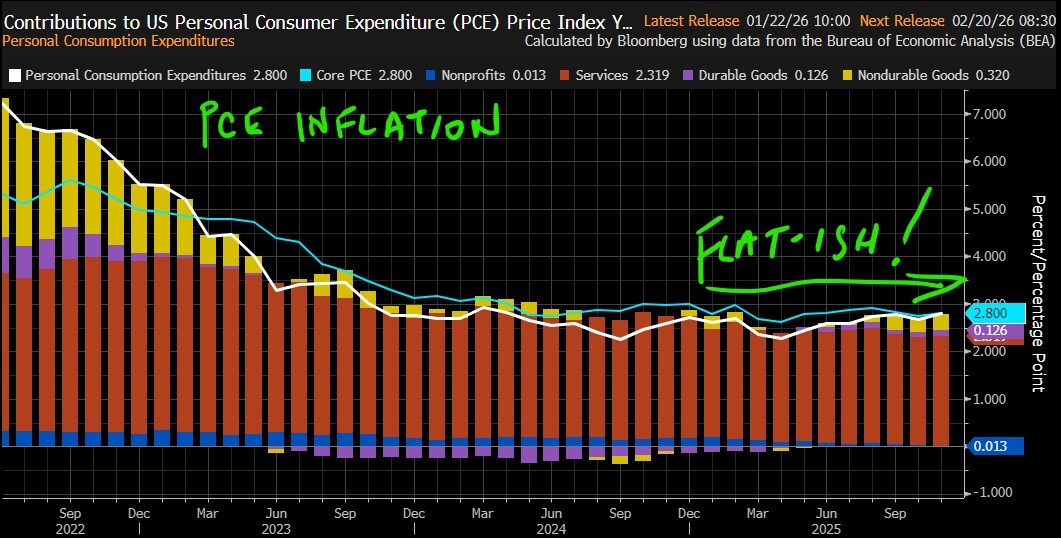
This is a Bloomberg ECAN <GO> chart–one of my absolute favorites. You can see the key components of the inflation figure represented by the various stacked bars. The largest bar (rust-colored) is services inflation. You should not be surprised, because services inflation has been and remains a problem. However, the astute eye should pick up the fact that it is receding–albeit very, very slowly. That said, you may also note the recent emergence of nondurable goods inflation (yellow bars).
Nondurables are things like food, gasoline, paper towels, toothpaste, and clothing. The main culprit behind this is, as you might already suspect, food inflation. Why is the Fed so worried about inflation? Well, it all started with tariffs. Earlier last year, the Fed started making noise about its fear that tariffs would cause inflation to ratchet back up to where it was on the left-hand side of my chart. Indeed, tariffs do contribute to inflation, but their exact effect is not one for one and varies from industry to industry, and indeed, product to product.
The first place we would expect that impact to show up would be in durable goods (purple bars). Durables are high ticket items that hurt when dropped on your toe–and typically manufactured abroad (subject to tariffs). Durable goods inflation did, in fact, pick up throughout 2025, but it is important to note that the trend turned positive far before Trump even entered office. In other words, it wasn’t tariffs that initially caused disinflation to go back to inflation. Further, despite tariffs which were already present in 2025, durable goods inflation is minor and has been relatively flat. Plainly, inflation is not speeding up, despite tariffs. Therefore, I will ask you this: should the Fed be worried about inflation and subsequently keep interest rates restrictive? Moreover, would restrictive rates even help prevent inflation caused by tariffs?
To be clear, prices of goods are too damn high. Food, cars, homes… you name it. Will higher interest rates cause those prices to go back to where they were in 2019? Sadly, the answer is no. There is a way to get prices to deflate, but you may not want to know what that is. It is, however, my duty to inform you that the only sure-shot method for deflation is a painful recession. A recession so bad that folks literally stop buying things out of fear or lack of funds due to unemployment. I think that I can speak on behalf of all of us and say “we don’t want that!” What we do want however is to be able to afford more. The path to that is wage growth! How do we incentivise companies to pay higher wages? Through higher margins. That can be helped in two ways: lower financing costs, lower taxes, and less regulation. The former is the responsibility of the Fed ( 👀 ), and latter two–the administration and congress ( 👀👀). Everyone must do their part.
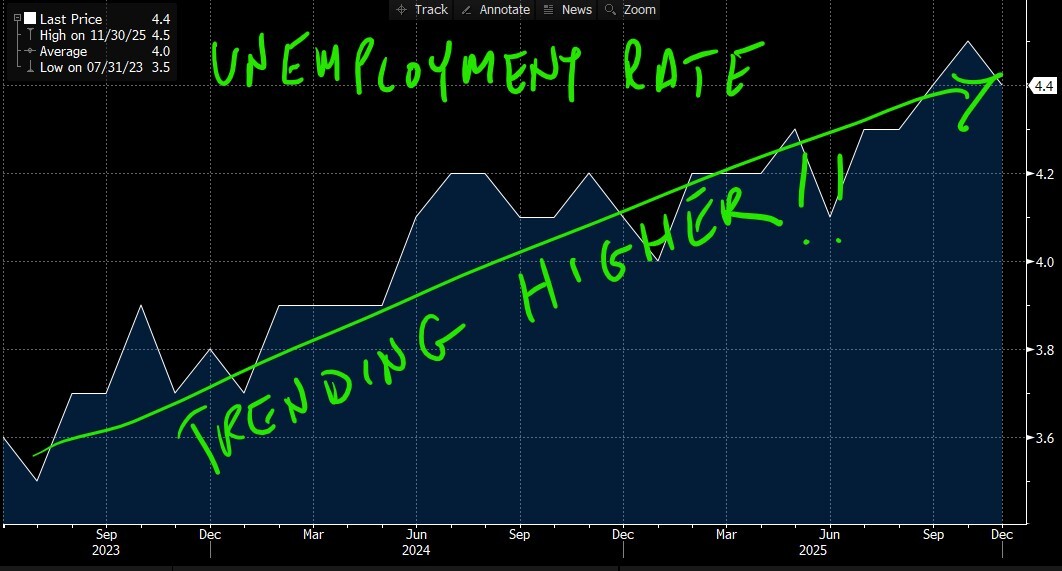
Now, let’s wrap this up by saying that inflation is not a problem. At least it wasn’t in November of last year. The economy is solid which means companies may have head room to keep wage growth going. At least the economy was solid last year. It is also important to note if wage growth is too strong, it can result in inflation (demand pull), so policy makers still need to be mindful. With the labor market strained (see the chart that follows), it is more likely that consumption will be negatively affected if the trend of unemployment continues. The message to policymakers is clear: please be proactive!
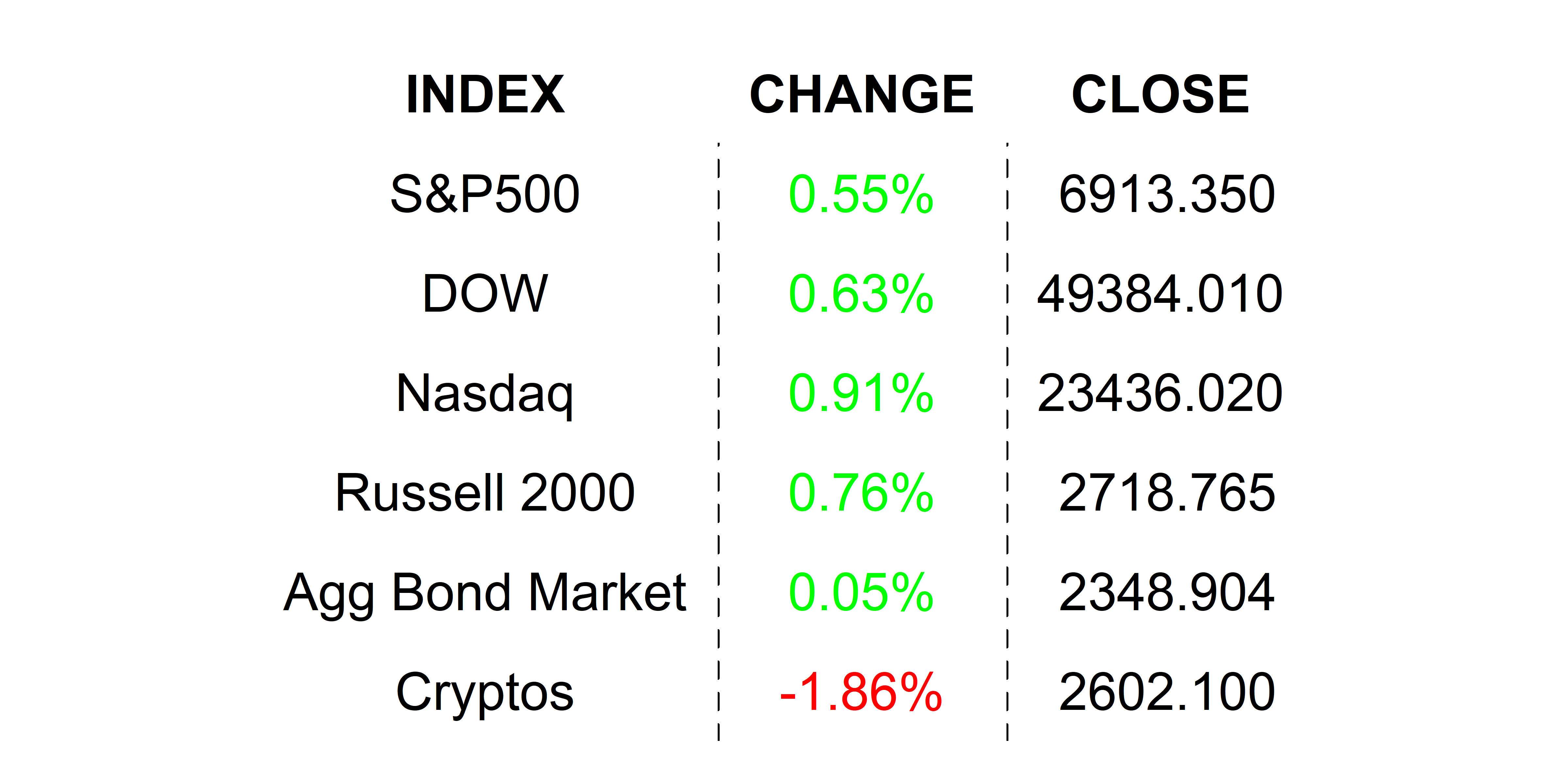
YESTERDAY’S MARKETS
Stocks continued their climb yesterday in response to the standing down of tensions over Greenland at Davos. Inflation came in as expected, GDP came in a touch better than hoped for, and weekly unemployment figures were in line with estimates. That all spells “relief rally.” Enjoy it while it lasts…high hopes for Intel’s recent moonshot were dashed after the bell causing the stock to slide–that may add to pressure this morning.
NEXT UP
-
S&P Global flash US Manufacturing PMI (January) may have increased to 52.0 from 51.8.
-
S&P Global flash US Services PMI (January) may have increased to 52.9 from 52.5.
-
The Leading Economic Index (November) is expected to have slipped by -0.2%.
-
University of Michigan Sentiment (January) is expected to come in at 54.0 in line with earlier estimates.
-
Next week we have a wave of important earnings, FOMC Meeting, Durable Goods Orders, housing numbers, Consumer Confidence, December PPI, and Factory Orders. That should keep you pretty busy–you may want to check in on Monday to download the weekly calendars, so you don’t look like a tourist navigating the markets. 😉


 service@siebert.com
 Siebert Financial (800)872-0444