
.png)
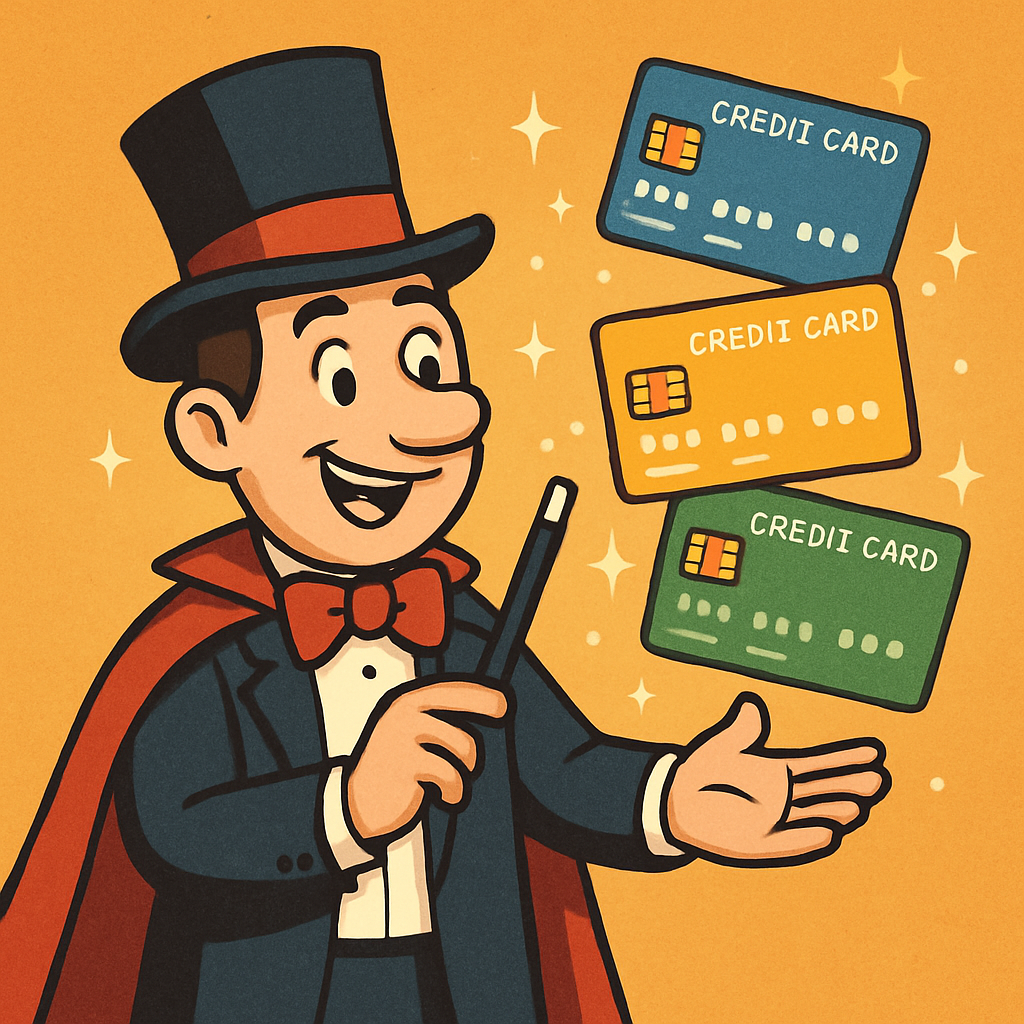
December begins with rate-cut optimism, fragile consumers, and markets praying Joe keeps his job.
KEY TAKEAWAYS
-
November showed how fragile sentiment is when Fed messaging turns cold
-
The consumer is propping up the economy with borrowed dollars, not confidence
-
Rate cuts don’t fix structural weakness–they simply delay the pain
-
Joe Consumer reacts to relief by spending, not deleveraging
-
If jobs crack, the whole “soft landing” narrative evaporates instantly
MY HOT TAKES
-
Rate cuts help only if jobs hold
-
The consumer is the engine of everything
-
Credit expansion is masking weakness
-
The Fed is propping up behavior not fundamentals
-
December depends on Powell not Santa
-
You can quote me: “The Fed isn’t managing inflation –it’s managing American psychology.”
Slip and slide. Welcome to December! We made it. This, after a quite interesting November, which was supposed to be the icing on the bull-market-rally cake. But, alas, it wasn’t meant to be–not a blockbuster, at least. I am sure you have heard that November is typically a good month for stocks. That claim comes from looking at November’s historical performance and comparing it to the other months. November comes in the winner if you look back 20 years. Now, I am sure that we can come up with all sorts of anecdotal reasons why November was the biggest earner on average, but the reality is that those historical returns are just that: historical returns. In statistics, we would call those observations. So, technically, we can only say that November has been a historically strong month. It doesn’t necessarily have any power to predict future Novembers. This November kind of supported that notion.
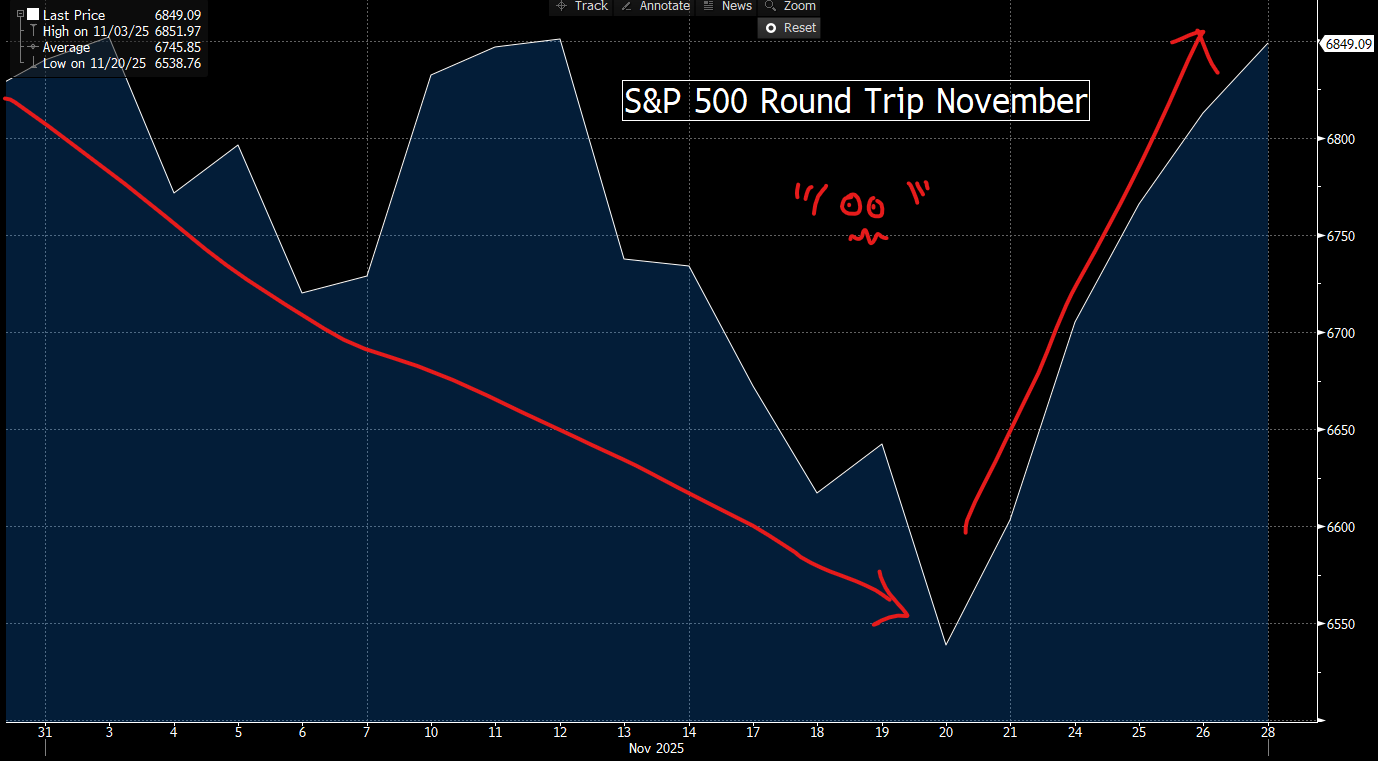
It looked good until it didn’t. By mid-month it was looking rather grim, in fact. Market-leading tech/AI was getting hammered with many calling it a bubble, overvalued, stretch… fake, you name it. But the real culprit for the selloff was more likely the Fed’s nasty language about a December rate cut. We saw almost 100% likelihood go to 70% to 50%, and then to 30-something percent in a matter of weeks in the wake of Powell’s post FOMC meeting commentary in which he dashed hopes with a “no guarantee.”
But something happened. Economic numbers, still sparse from the Government shutdown, started to paint a less-than-healthy view of the economy. Employment is clearly under pressure, consumer confidence is in the basement, and purchasing managers’ indexes (PMIs) warned of declining corporate sentiment. Most of that data came from private sources but the message was clear. The Fed would be forced to reckon with a weakening economy increasing the likelihood of another rate cut in December. That narrative came together in the last weeks of November which enabled the S&P 500 to squeak out a slight gain for the month.
And now we are here in December with an FOMC meeting NEXT WEEK! Checking on Fed Funds futures this morning, we note that the probability of a 25 basis-point cut is 100%. While we are at it, folks have started looking ahead to 2026, and the statements are already flying around the media “one in December and another 3 next year!” That’s right, folks are already attempting to figure out how many rate cuts we will get for the entirety of 2026.
If that comes to fruition, Fed Funds, which are at 4% today, would be around 3% a year from now. Sounds great in a headline but what does it really even mean? The Fed Funds rate is the rate banks charge each other to borrow money overnight to meet reserve and liquidity requirements. Does it mean anything to your portfolio of stocks? Obviously, there is some connection to the cost of corporate borrowing, which should be less if rates are lower. But really, what does it mean for an average person? Does it mean anything to your portfolio of stocks? Sure, lower rates reduce corporate borrowing costs, but that’s the high-level, 30,000-foot view. The far more interesting question is what it means for the average person.
And that brings us to the real engine of the U.S. economy: the consumer–MY FAVORITE TOPIC. 🤣 Consumption isn’t just one of many factors in GDP–it is THE factor, accounting for nearly 70% of all economic activity. When the consumer wobbles, the economy wobbles. When the consumer spends, companies breathe. When the consumer tightens up, markets eventually follow. And what keeps the modern consumer spending even when savings are thin and confidence is shaky? Credit. Not income growth. Not raises. Not windfalls. Credit. The following chart on Total Consumer Credit Outstanding tells a story that doesn’t get enough airtime. That line doesn’t drift. It climbs. In fact, it climbs with a persistence that makes the S&P 500 look… er, modest. We are now north of $5 trillion in consumer credit when you include revolving and non-revolving. Credit cards alone sit above a trillion. Americans are using their plastic to maintain lifestyles that their cash flows do not necessarily support, and they have been doing so increasingly over the past two years.

This is where my friend Joe comes in. Joe (full name is Joseph Consumer) is not some exotic case study pulled from an obscure paper. Joe is the person you know. In fact, Joe might be you. Good job, solid income, expensive city, lifestyle that always slightly outruns paychecks. Joe charges between $4,500 and $6,000 a month on credit cards–dinners, travel, Amazon purchases that seemed important at the time, gifts, streaming services, a random splurge or two. And like many Americans, Joe pays part of the balance each month, not all. The logic is always the same: “I’ll pay it down when things calm down.” Things never calm down. So Joe carries a balance at something like 28.99% APR. Not ideal, but manageable as long as the job holds. Then next December rolls around and the Fed Funds rate is 100 basis points lower (that’s 1 full percentage point), and guess what? Alex’s minimum payment goes down by $20 or $30, thanks to the benevolent Fed. Not enough to change life, but enough to change behavior.
And this is exactly how monetary policy actually hits the real economy. It hits through people like Joe. We like to think of the Fed as some magical puppet master pulling interest-rate strings that guide corporate CAPEX and Treasury yields. But most of the immediate transmission flows straight into credit card APRs, HELOCs (home equity lines of credit), auto loans, and personal loans. When rates fall, monthly payments fall. And when payments fall, consumers feel relief. And when consumers feel relief, they spend. Not pay down debt–spend. Joe sees that lower minimum payment and thinks, “Finally, some breathing room,” and promptly uses that room to buy more holiday gifts, book a getaway, upgrade the phone, or splurge on the nicer wine (the one with the fancier label). Multiply Joe by tens of millions and you see exactly how a 100-basis-point cut can re-energize consumption even when economic sentiment is lousy. The debt burden doesn’t go away. It often grows. But the pressure feels lighter, and that’s all it takes.
This is why markets care so deeply about the Fed. It isn’t just that lower rates help corporations borrow more cheaply. It’s that lower rates encourage consumers to keep consuming, even when underlying fundamentals are weakening. Consumer spending props up earnings. Earnings prop up stock prices. And stock prices prop up confidence. It is a feedback loop powered not by productivity growth or rising real wages but by the quiet expansion of household leverage, inch by inch, statement by statement. The Fed doesn’t just set the cost of capital for banks. It indirectly influences the cost of keeping up with your life.
But here is the uncomfortable flip side of all this, and it’s a big one. Everything I just described works beautifully if the economy holds together–if Joe keeps his job, if wages remain stable, if employers don’t suddenly start trimming headcount to protect margins, which appears to be happening on the fringes already. Because once Joe loses that job, the whole machine seizes up. A $20 or $30 reduction in a minimum credit card payment doesn’t save anyone when income goes to zero. At that point, the likelihood of delinquency and default spikes, and there isn’t a rate cut in the world that fixes that. Cheaper borrowing costs can ease strain on the margins, but they cannot replace a paycheck. That is the cold reality beneath the glow of rate-cut optimism, and it’s why the labor market, not just inflation, is the real linchpin of everything the Fed is trying to manage.
That brings us back to the Fed and, well, the fact that we are officially in December. Looking back at history, December is not a bad month, earning on average 0.59% over the past 20 years. Not exactly the 2.56% expected in November, but certainly better than worst-month September’s –0.65% average loss. In December, the S&P 500 logged a gain in 12 out of the last 20 years. That is better odds than a coin toss. Have you heard of the Santa Rally? That’s probably where that came from. Maybe it’s just wishful thinking, or what I often call “a convenient observation.” Rather than getting caught up in all that, it would seem like focusing on the Fed and what it does and says next week may be a better predictor of whether we get a positive return for the month, or we end up with a lump of coal.
FRIDAY’S MARKETS
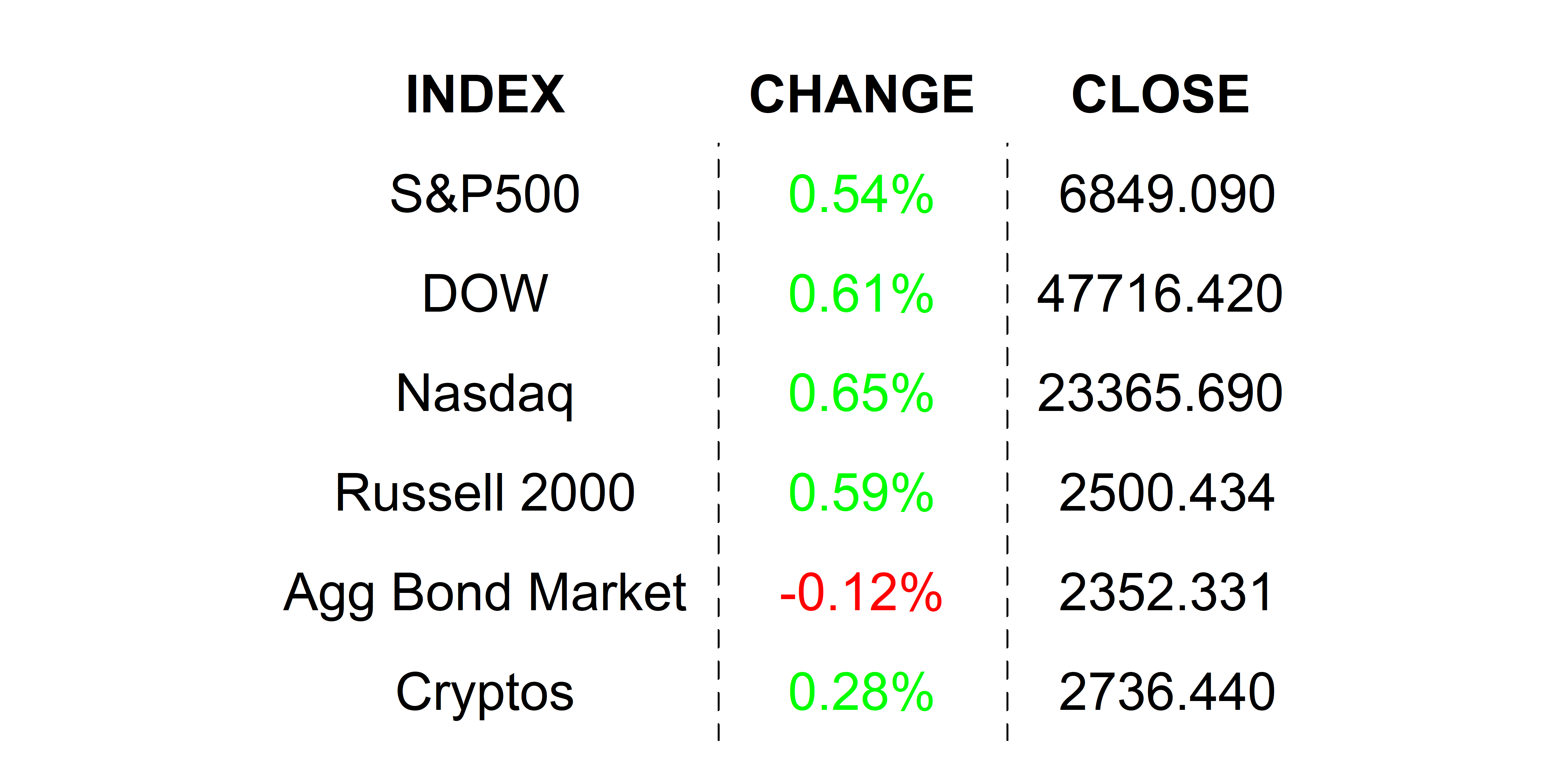
Stocks managed to slip in with a monthly gain–almost completely undetected. Rate cut odds are making investors feel a bit better, but slipping risk-assets may keep buying in check. Bitcoin is desperately seeking a bid to keep it above key technical levels.
NEXT UP
-
ISM Manufacturing (November) may have inched higher to 49.0 from 48.7.
-
Leading Economic Index (September) is expected to have slipped by -0.3%. This is an old number–even though it is a private number, it relied on public data which was on hold during the shutdown.
-
Later this week we will get ADP Employment Change, ISM Services PMI, PCE Price Index from September, and University of Michigan Sentiment. Download the attached earnings and economic calendars to get details–if you want to track Santa’s sleigh from the North Pole.
DOWNLOAD MY DAILY CHARTBOOK HERE 📈

 service@siebert.com
 Siebert Financial (800)872-0444